
Reviewed · TONLE SAP LAKE TOURS
Angkor Wat & Tonle Sap Lake Private Day Tour
Angkor Wat tells Cambodia’s old stories in stone. Tonlé Sap shows how people still live with water today. This private day tour links both sides of Siem Reap, taking you from the grand temple of Suryavarman II to a local boat ride through floating homes, floodplains, and flooded forest.
I like the private air-conditioned vehicle, which gives you a quieter day and pickup at your Siem Reap hotel. I also like the contrast between the temples and the lake. You get major Angkor sights, then a look at a working water-based community rather than spending the whole day among ruins.
The main drawback is the tight schedule. You will spend about two hours at Angkor Wat, one hour at Bayon, and up to five hours around Kompong Phluk, including lunch and the boat trip. Also, the $40 price does not cover the Angkor Pass, lunch, tips, insurance, or a stated $20 government tax and community development charge.
In This Review
- Key points to know before booking
- Why this day works as a Cambodia introduction
- Starting at the Angkor ticket office
- Angkor Wat in a two-hour visit
- Passing through Angkor Thom’s South Gate
- Reading the faces of Bayon
- The road to Kompong Phluk
- What you will really see on Tonlé Sap
- What the $40 price really buys
- Who should book this private day tour
- Final booking advice
- FAQ
- How long does the Angkor Wat and Tonlé Sap tour last?
- What time is hotel pickup?
- Is the tour private?
- Is the Angkor Pass included?
- Is lunch included?
- What transport is provided?
- How long is the boat ride?
- What is the extra $20 charge?
- Can I cancel for a full refund?
Key points to know before booking
- Two very different Cambodia experiences: Ancient temple art in the morning gives way to lake life and flooded forest in the afternoon.
- Private transport and boat: Your group travels in its own air-conditioned vehicle and takes a private boat tour.
- Angkor Pass is extra: You stop at the ticket office before entering the archaeological park, and the pass is not included.
- Long lake visit: The Kompong Phluk portion is allotted about five hours, including the drive, lunch break, and roughly 1.5 hours on the water.
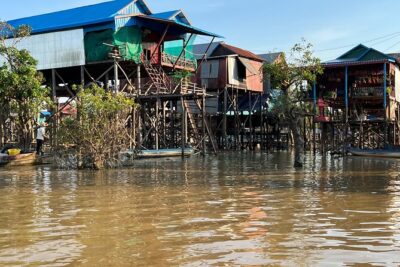
- Village expectations matter: The area includes homes on stilts, scattered floating houses, and flooded forest. It may not look like one dense floating village.
- Easy hotel logistics: Pickup is offered in Siem Reap from about 7:30 to 8:30 a.m., with return transport at the end.
Why this day works as a Cambodia introduction
I like this tour because it avoids making Siem Reap only about temples. Angkor Wat is the main draw, of course, but the Tonlé Sap portion gives your day a second subject: how water shapes homes, transport, work, and the countryside.
That contrast is useful. At Angkor, you study a powerful empire through towers, carvings, gates, and religious buildings. At Tonlé Sap, you see a present-day community adapted to seasonal water levels. One stop looks backward through stone. The other asks you to pay attention to ordinary life.
The tour lasts about nine hours, so you should treat it as a full day rather than a casual morning outing. The early pickup window begins at 7:30 a.m. and may run until 8:30 a.m., depending on your hotel and arrangements. Pack light, wear practical clothes, and expect heat, walking, road time, and a boat ride.
Your driver-guide speaks English and remains with you through the main touring portions. The supplied details do not give the guide’s name, so you should confirm that after booking if having a named guide matters to you.
More Tonle Sap lake trips:
- Sunset tour of Kampong Phluk stilts home village on the Tonle Sap
5.0 · 4,865 reviews - Siem Reap: Kulen Mountain, Beng Mealea and Tonle Sap Tour
5.0 · 1,483 reviews - Tonle Sap Lake & Kampong Phluk Village Half-Day Tour
5.0 · 1,045 reviews
Starting at the Angkor ticket office
The first stop is not a sightseeing stop, but it matters. Your driver takes you to the Angkor Wat Ticket Office, where you pay for and receive the required Angkor Pass.
The pass is not included in the tour price. That means the advertised $40 is only part of your day’s actual cost. You should also allow for the stated $20 per-person government tax and community development charge, along with lunch and a tip if you choose to give one. Travel insurance is also excluded.
This payment structure is common enough to be manageable, but it is worth understanding before you reserve. The tour is not a $40 all-in visit to Angkor and Tonlé Sap. It is a $40 private transport and guiding package with several additional charges.
The stop is listed as about 15 minutes. Keep your ticket safe for the rest of the temple visit. Since this is a private outing, the group can generally move on once everyone has completed the ticket step rather than waiting for a large coach party.
Angkor Wat in a two-hour visit
Angkor Wat was built in the early 12th century for King Suryavarman II as his state temple and capital. It is the best-preserved major temple in the Angkor complex, and it remains the central sight of the day.
Two hours is enough to see the principal areas with a guide, but it is not enough for a slow study of every carving and passage. You will need to stay aware of the meeting plan and keep moving at a sensible pace. If you are fascinated by architecture or want extended time for photographs, you may find the visit brief.
The value of a guide is especially clear here. Angkor Wat is large, and its carved scenes can seem like a wall of stone if you do not know what to look for. The tour promises an English-speaking driver-guide who can connect the temple art with the stories and beliefs behind it. Ask questions as you go, since the stop is too short to absorb everything passively.
The temple also sets the tone for the rest of the morning. You begin with a carefully planned royal monument, built for power and worship. Later, the lake visit shifts your attention to people who use water as part of daily life. That change is the best reason to choose this combined tour instead of a temple-only outing.
Passing through Angkor Thom’s South Gate
After Angkor Wat, you continue to Angkor Thom, a fortified city covering about six square miles, or 10 square kilometers. The South Gate is a short stop of about 20 minutes.
The approach is one of the memorable parts of the route. You enter across a causeway lined with carved figures. The gate gives you a sense of scale and design before you reach Bayon itself.
Twenty minutes goes quickly. You should think of this as a focused photo and orientation stop, not a full exploration of Angkor Thom. Listen for the explanation of the gate and the fortified city, then use the remaining time to look closely at the stone figures and the entrance design.
This brief stop works well in a packed day because it breaks up the drive and prepares you for Bayon. It would not satisfy someone hoping to see every corner of Angkor Thom, but the tour is built around highlights rather than an exhaustive archaeological survey.
More Angkor temple itineraries:
- Angkor Wat Sunrise or Sunset Tour with Guide from Siem Reap
5.0 · 12,109 reviews - Siem Reap: Angkor Wat: Small-Group Sunrise or Sunset Tour
5.0 · 9,444 reviews - Siem Reap: Angkor Wat 2-Day Tour with Sunrise and Sunset
4.9 · 4,429 reviews - Siem Reap: Full-Day Angkor Wat Guided Tour with Sunset
4.9 · 3,803 reviews
Reading the faces of Bayon
Bayon Temple receives about one hour. Built in the late 12th or early 13th century, it served as the state temple of Jayavarman VII, a Mahayana Buddhist king.
Bayon feels very different from Angkor Wat. Angkor Wat presents a grand, ordered composition. Bayon is known for its towers and carved faces, with galleries and reliefs that reward a closer look. One hour lets you see the main features and hear the basic story without turning the stop into a long architectural study.
I would use this hour carefully. Stay close enough to your guide to hear the explanation, then set aside a few minutes to examine the bas-reliefs. The carved scenes are valuable because they show more than religious ideas. They also give clues about warfare, court life, ceremonies, and everyday activity during the Khmer period.
By the end of the morning, you have visited three different types of Angkor sight: the main temple, a monumental city gate, and a temple with a more enclosed, face-filled character. That is a good selection for a first visit, though repeat visitors may want a tour with more time at smaller temples.
The road to Kompong Phluk
After the temple portion, you have lunch at your own expense. The details do not specify a restaurant or meal arrangement, so you should plan to pay separately and confirm the timing with your guide.
The drive to the countryside takes about 45 minutes. That road time is part of the experience, but it also explains why the day feels long. You are not simply walking from one nearby attraction to another. The tour connects the Angkor zone with the Tonlé Sap shore, so the afternoon includes a real transfer through the countryside.
At the quay, you board a local boat for a ride of about 1.5 hours to Tonlé Sap Lake. The tour includes a private boat, which is a useful feature for a small group. You can focus on the guide’s explanation and the view without being folded into a large boat party.
The supplied details use Kompong Phluk for this stop. A response connected with the experience uses the name Kompong Khleang instead, so I would confirm the exact village and route before booking. That distinction matters because these lake communities are not identical, and the wording around a floating village can create the wrong picture.
What you will really see on Tonlé Sap
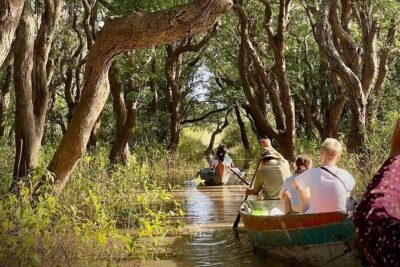
The lake portion is presented as a look at floating villages and flooded forests. You should expect a mix of water-based scenery, homes on stilts, scattered floating houses, and forest that is covered during the wet season.
Do not picture one tightly packed village made entirely of floating houses. The area can include houses spread along waterways and a stilted settlement on land that changes character with the water level. One account of this experience specifically objected to the idea of a single, dense floating village and described scattered floating homes alongside a beautiful stilt village.
That is not a reason to reject the stop, but it is a reason to set fair expectations. The interesting subject is not a staged collection of floating houses. It is the way the whole community responds to Tonlé Sap’s seasonal cycle. Water changes the routes, the position of homes, and the role of the flooded woodland.
The 1.5-hour boat ride gives you time to watch those changes. Keep your attention on the shoreline and waterways, not only on the most obvious houses. The trip is strongest when you treat it as a look at a living environment rather than a checklist attraction.
The full Kompong Phluk section is listed as about five hours, but that includes the drive, arrival at the quay, lunch, and the boat trip. You are not spending five straight hours on the water. This is important for planning, especially if you prefer compact sightseeing days.
What the $40 price really buys
At $40 per person, the tour can offer solid value for a private full-day outing, but the final bill is higher than the headline price. The package includes an air-conditioned vehicle, hotel pickup and drop-off, an English-speaking driver-guide, a private boat tour, and cool towels during the day.
For a private group, those inclusions matter. You are paying for transport between several places, not just entry to one temple. The air conditioning is especially useful after walking around Angkor, while the cool towels are a small but practical comfort in Cambodia’s heat.
The biggest extra is the Angkor Pass, whose price is not provided here. You also pay for lunch, tips, travel insurance, and the stated $20 per-person government tax and community development charge. Add these costs before comparing this tour with a larger group option.
The private format is best for people who value control and a quieter pace. You can ask questions, spend a little longer at a favorite feature when possible, and avoid the social friction of a large group. The schedule is still fixed enough that you cannot linger freely at every temple, but the format should feel more personal than a standard coach tour.
A 4.5 rating based on four published ratings suggests a generally positive reception, but the sample is small. I would give more weight to the practical details than to the number itself: the private transport, private boat, clear temple selection, and the warning that the floating village may not match the most dramatic advertising image.
Who should book this private day tour
I would choose this tour if you have one full day in Siem Reap and want both Angkor and Tonlé Sap without arranging separate transport. It suits first-time visitors who want the famous temple highlights but also want to see something connected to modern Cambodian life.
It is also a good fit for couples, families, and small private groups who prefer their own vehicle and boat. Pickup and return at your hotel simplify the day, and the air-conditioned transport gives you a break between outdoor stops.
You may want a different plan if your main goal is detailed archaeology. The schedule gives only two hours at Angkor Wat, 20 minutes at the South Gate, and one hour at Bayon. A temple specialist could reasonably want more time and more sites.
You should also reconsider if you expect a postcard-style floating village made only of houses on water. The Tonlé Sap stop is better understood as a community and floodplain visit, with stilt homes, scattered floating structures, waterways, and flooded forest.
The tour requires a full nine-hour commitment. If you dislike early starts, road transfers, or combining several major stops in one day, a shorter temple visit may suit you better. If you want variety and practical transport, the long day makes sense.
Final booking advice
Book this tour if you want a private, efficient introduction to both sides of Siem Reap: Angkor’s carved monuments and Tonlé Sap’s water-based communities. The strongest features are the private vehicle, private boat, hotel transfers, and the clear contrast between ancient royal architecture and present-day lake life.
Before paying, confirm three points: the exact Tonlé Sap village, the full amount of the government and community charge, and the Angkor Pass cost. Go in expecting a mixed stilt-and-floating settlement rather than one dense floating village, and you are more likely to appreciate what the boat ride actually offers.
Free cancellation is available up to 24 hours before the start time. Changes or cancellations inside that window are not accepted for a refund. That gives you some flexibility, but you still need to check the local start time and plan your hotel pickup carefully.
FAQ
How long does the Angkor Wat and Tonlé Sap tour last?
The tour lasts approximately nine hours.
What time is hotel pickup?
Pickup is offered in Siem Reap from about 7:30 to 8:30 a.m.
Is the tour private?
Yes. Only your group participates in the private tour and private transport.
Is the Angkor Pass included?
No. You stop at the Angkor Wat Ticket Office to pay for and receive the required Angkor Pass. The pass cost is not included in the tour price.
Is lunch included?
No. Lunch is taken at your own expense.
What transport is provided?
The tour includes an air-conditioned vehicle, private hotel pickup and drop-off, and a private boat tour at Tonlé Sap.
How long is the boat ride?
The boat ride to Tonlé Sap Lake takes approximately 1.5 hours. The full Kompong Phluk portion is listed as about five hours, including other activities and travel time.
What is the extra $20 charge?
The tour information lists a $20 per-person government tax and community development charge as an extra cost.
Can I cancel for a full refund?
Yes. You can cancel at least 24 hours before the experience start time for a full refund. Cancellations or changes made less than 24 hours before the start time are not refunded or accepted.
Fresh reviews from around Siem Reap
- Full-Day Tour Preah Vihea & Koh Ker Temple 3.7 · 3 reviews
- Savor the Countryside: Tours with Authentic Cooking Classes” 5.0 · 3 reviews
- Angkor Wat Sunrise TukTuk Tour 5.0 · 3 reviews
- Angkor Grand Circuit Tour & Banteay Srei 5.0 · 3 reviews
- Guided Private Tuk Tuk Tour Angkor Wat and Small Circle and Five Extras 5.0 · 3 reviews
- Siem Reap Temple Tour 2-Day with Sunrise/Sunset 3.7 · 3 reviews
- Bangkok to Angkor Wat 2 Days 1 Night by Flight 4.5 · 3 reviews
- Kompong Pluk Tour 5.0 · 3 reviews
Tonle Sap Lake Tours, compared.
Sunset tour of Kampong Phluk stilts home village on the Tonle Sap
Read our review →

Kulen Mountain with Beng Mealea and Tonle Sap Small Group Tour
Read our review →
Half Day Kompong Pluck stilt home Village on Tonle Sap & Sunset
Read our review →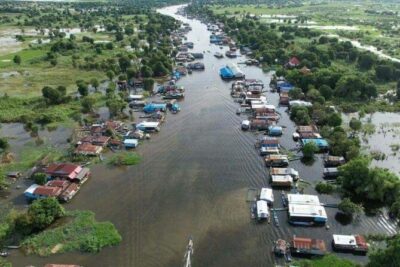
Kampong Khleang Floating Village and Tonle Sap Half Day Tour
Read our review →Browse the lists this tour appears in