
Reviewed · ANGKOR TEMPLE TOURS
Angkor Wat: Full-Day Temples Small Group Tour
Angkor Wat is only the headline. This full-day outing also brings you through the enormous fortified city of Angkor Thom, the many-faced towers of Bayon, and the tree-wrapped ruins of Ta Prohm. With guides such as Yuth, Pal Saruon, Sam, and Sok, you get history, Buddhist context, and help finding good photo spots rather than just a ride between ruins.
I like the small-group format, which gives you room to ask questions and can make the long day feel personal. I also like the practical care: an air-conditioned vehicle, bottled water, and cold towels waiting after hot temple walks. The main catch is cost clarity: the advertised $17 is only the tour price, so you must add the $37 Angkor Pass and pay separately for lunch.
In This Review
- Key points to know before booking
- Why this is a good first look at Angkor
- The morning pickup and ride from Siem Reap
- Angkor Wat, Cambodia’s great opening scene
- Angkor Thom and the stone faces of Bayon
- Lunch and a pause at Srah Srang
- Ta Prohm and the power of atmosphere
- How good are the guides?
- Walking, heat, clothing, and comfort
- What the $17 price really means
- Who should book this temple day?
- Should you book it?
- FAQ
- How long does the Angkor Wat temple tour last?
- What temples and sites are included?
- Is the Angkor Pass included in the tour price?
- Is lunch included?
- What should I wear and bring?
- Is hotel pickup included?
Key points to know before booking
- Three essential temple areas: Angkor Wat, Angkor Thom with Bayon, and Ta Prohm form a strong first visit to the complex.
- Early start and long day: Plan on roughly eight hours, with substantial walking over uneven paths and temple steps.
- Small groups matter: Groups can be as small as three people, and the format leaves space for questions and photographs.
- Comfort extras help: Air-conditioning, bottled water, and cool towels are especially welcome in Cambodia’s heat.
- Budget beyond the headline price: Add the $37 one-day Angkor Pass, plus lunch at a local restaurant.
- Dress for temple rules: Your knees and shoulders must be covered, and comfortable shoes are essential.
Why this is a good first look at Angkor
If you have only one full day for Angkor, this route covers the monuments you most want to see. Angkor Wat gives you the grand ceremonial entrance and long galleries. Bayon supplies the unforgettable stone faces. Ta Prohm brings the mood, with trees and roots pressing into a temple that feels partly reclaimed by the forest.
That mix is the tour’s biggest strength. You do not spend the whole day looking at similar towers. Each major stop offers a different idea of Khmer architecture and religion, and the guide links them together.
The guiding is also a major part of the value. Guides including Pal Saruon, Yuth, Sam, Sok, Chhay, and Muon Monirom have been praised for clear English, Cambodian history, temple symbolism, and Buddhist traditions. Several have also helped with group photos and pointed out carvings that are easy to miss when you walk alone.
The tradeoff is pace. Angkor Wat is vast, Angkor Thom is spread across a large area, and Ta Prohm involves a good deal of walking. You get a useful overview, but not the slow, scholarly examination of every gallery and inscription.
More Angkor temple itineraries:
- Angkor Wat Sunrise or Sunset Tour with Guide from Siem Reap
5.0 · 12,109 reviews - Siem Reap: Angkor Wat: Small-Group Sunrise or Sunset Tour
5.0 · 9,444 reviews - Siem Reap: Angkor Wat 2-Day Tour with Sunrise and Sunset
4.9 · 4,429 reviews
The morning pickup and ride from Siem Reap
The experience begins with hotel pickup in Siem Reap and transport in an air-conditioned bus or van. The supplied timing information contains two different pickup windows, one around 4:10 to 4:30 AM and another around 7:40 to 8:00 AM. The operator is supposed to confirm your exact time one day before departure, so check that message carefully rather than relying on a generic schedule.
This timing difference matters. A very early start can be useful for cooler conditions and morning light, but it also means you need to organize breakfast and sleep around the departure. A later start changes the feel of the day and may mean more heat during the temple walks.
The ride to the complex is listed as about 30 minutes. Once you arrive, the van becomes an important part of the day. You return to it between temple visits for a break from the sun, and the included water and cold towels are not decorative extras. After an hour on hot stone, a chilled towel can feel like a small miracle.
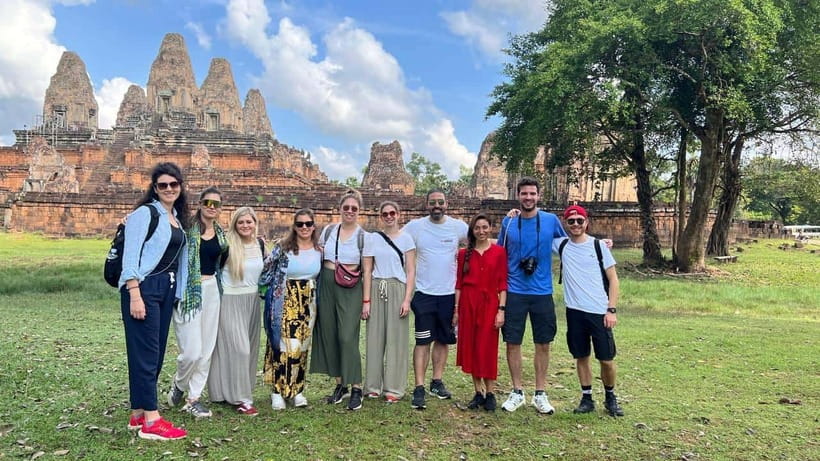
The group format is advertised as small, and group size can vary. One particularly good outcome is a group of three, though groups of around seven have also been reported. A smaller party makes it easier to hear the guide, ask questions, and pause for photographs without holding up a large crowd.
Angkor Wat, Cambodia’s great opening scene
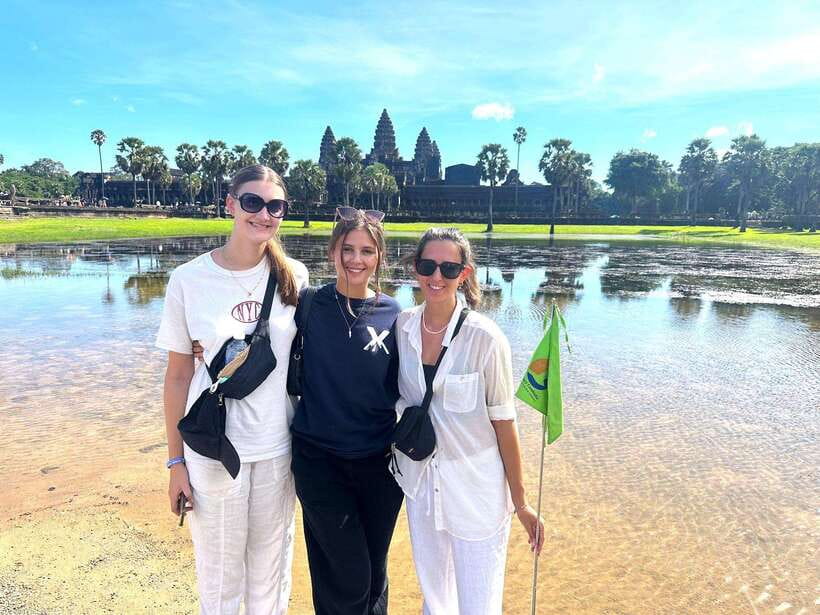
Angkor Wat receives about two hours of guided sightseeing. Built in the 12th century, it took roughly 30 years to complete and represents Khmer civilization at its peak. It was created as a Hindu temple dedicated to Vishnu and later became an important Buddhist site, so the carvings and layout carry layers of religious meaning.
The first impression is scale. The towers, galleries, moat, courtyards, and long approach make Angkor Wat feel less like a single building than a carefully ordered sacred world. A guide helps you read that order instead of simply taking the standard entrance photograph.
Look closely at the bas-reliefs and carved details. The walls tell stories through battles, processions, divine figures, and scenes from Hindu epics. The guide can point out details you might walk past, and several guides on this route are especially good at connecting temple design with Cambodian history and belief.
You should expect crowds and plenty of photography here, even with a well-planned visit. Angkor Wat is the most famous stop, so this is not the place for quiet solitude. Still, two hours gives you enough time to see the main areas without making the opening visit painfully rushed.
Wear clothing that covers your shoulders and knees. Bring a hat and sunglasses, but remove the hat when appropriate inside sacred spaces, and remember that temple visits call for respectful behavior.
Angkor Thom and the stone faces of Bayon
The route continues to Angkor Thom, the fortified city that served as a major center of the Khmer Empire. You enter through the southern gate, where a row of 54 stone figures lines each side of the approach. Gods appear on the left and demons on the right, each pulling at a naga, or serpent.
This gate is a fine example of how Angkor turns a road into a story. The figures are not random decoration. Their arrangement refers to a famous Hindu creation myth, and the guide gives the scene a useful explanation before you move into the city.
Within Angkor Thom, you pass the Terrace of the Elephants and the Terrace of the Leper King. These long stone platforms can seem abstract at first, but the carved animals, guardians, and figures reward a closer look. The terraces also help you understand that Angkor Thom was not merely a collection of temples. It was a planned royal city with ceremonial spaces and avenues.
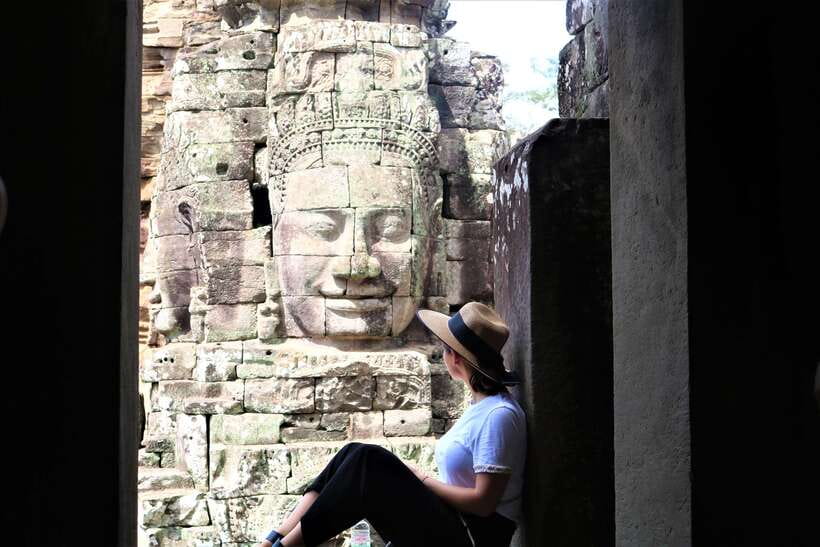
Bayon is the dramatic center of this part of the route. Its towers carry more than 200 enormous carved faces, with calm expressions that appear from different angles as you move through the tight interior. The temple is more compact and maze-like than Angkor Wat, so your guide’s explanation and route through the structure make a real difference.
I find Bayon less immediately orderly than Angkor Wat, and that is part of its charm. Narrow passages, stacked stones, and close-set towers create a sense of discovery. The drawback is that the interior can feel crowded, and uneven footing demands attention. This is not a place to hurry while looking only through your camera.
The tour lists about an hour for Bayon, with additional sightseeing around Angkor Thom. That is enough for a strong orientation, but you may want more time if you are fascinated by the reliefs or want to photograph every face.
Other Siem Reap experiences to weigh up
- Siem Reap: Full-Day Angkor Wat Guided Tour with Sunset
4.9 · 3,803 reviews - Full-Day Angkor Wat Sunrise Private Tour with Guide from Siem Reap
5.0 · 2,920 reviews - Siem Reap: Angkor Wat Sunrise and Full-Day Sightseeing Tour
4.9 · 2,828 reviews - Full-Day Guided Sunset Tour of Angkor Wat
5.0 · 1,507 reviews
Lunch and a pause at Srah Srang
A one-hour break is scheduled around Srah Srang, with lunch at a local restaurant near the temples. Lunch is not included, so carry Cambodian riel or US dollars as appropriate for your own spending needs, and allow for the extra cost when planning your budget.
This pause has a practical purpose. A full day among Angkor’s stones can be tiring, especially if you are visiting during a hot month. Use the hour to eat, drink, and rest rather than treating it as another sightseeing sprint.
The restaurant choice has been praised in connection with this route, but the exact meal and price are not specified. That means you should view lunch as a convenient stop, not a guaranteed culinary highlight. If you have dietary restrictions, confirm what is available with the guide.
Srah Srang itself is a reservoir associated with Angkor’s water system. The stop is listed with free time, coffee, tea, beer, and lunch, so the exact balance between eating and sightseeing may depend on the day’s timing. Keep some flexibility here. The most valuable part of the break may simply be sitting in the shade before the next temple.
Ta Prohm and the power of atmosphere

After lunch, you visit Ta Prohm for about an hour. This is the temple most closely associated with the Tomb Raider film, but the movie connection is only one small reason to come.
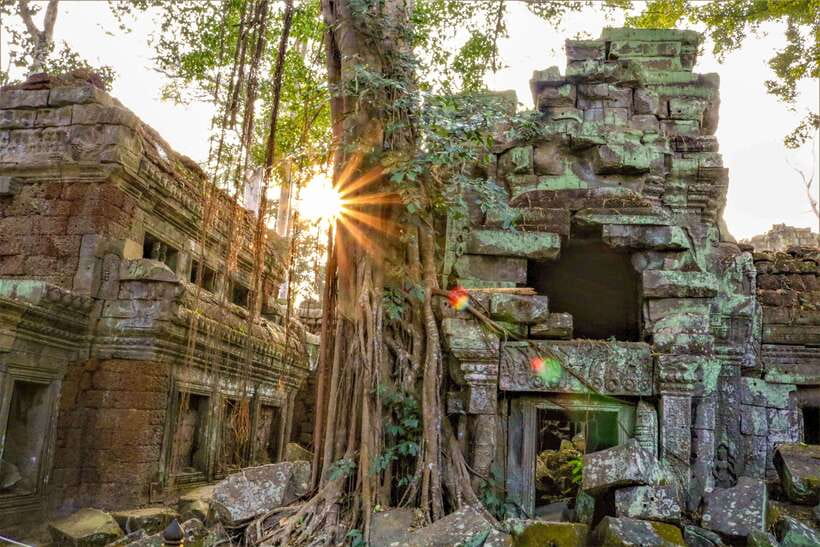
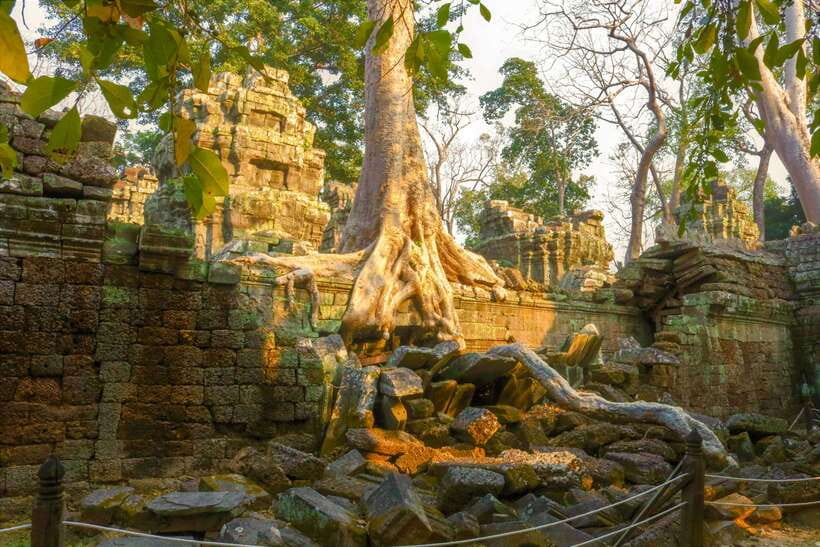
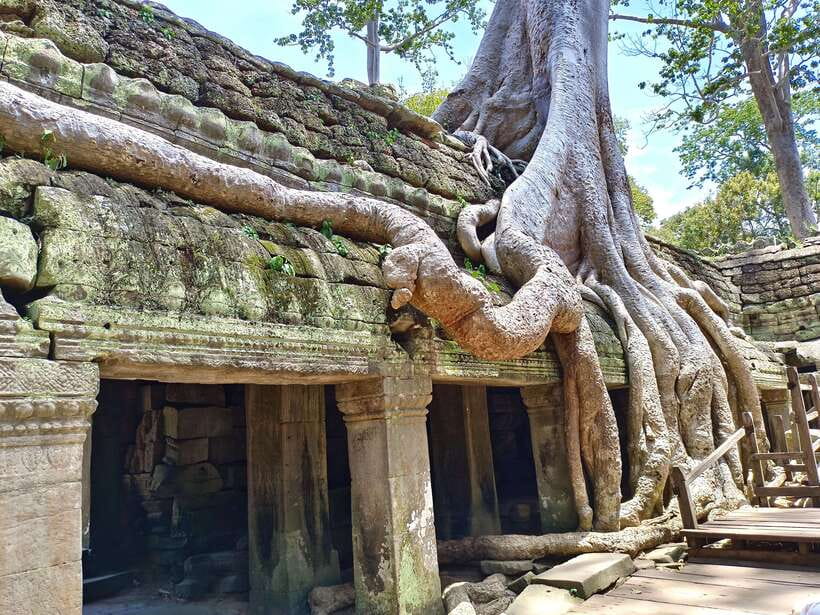
Ta Prohm is memorable because nature and architecture share the frame. Trees rise from the ruins, roots grip the walls, and galleries open into shadowed courtyards. The temple was once home to 2,740 monks, while today its partly collapsed spaces offer a vivid sense of age and change.
The site was rediscovered by French explorer Henri Mouhot in the early 1850s, and it still appears much as it did during that period of renewed European attention. That does not mean every stone is untouched, but the combination of vegetation, fallen blocks, and surviving carvings gives Ta Prohm its special mood.
Your guide can help separate fact from romantic jungle fantasy. This is still a major archaeological site with paths and managed access, not a completely lost ruin. You will likely find popular photo points, but the best experience comes from looking beyond the famous tree-root images to the doorways, carvings, and changing levels inside.
One hour is enough to see the main route, though it can feel short if you enjoy photography. Ta Prohm has uneven walkways and confined passages, so sturdy shoes are more useful here than fashionable sandals. Insects can also be an issue around wooded areas, making insect repellent a sensible item to pack.
How good are the guides?
The guide can determine whether Angkor feels understandable or merely impressive. This tour uses English-speaking guides, and the strongest examples include Yuth, Pal Saruon, Sam, Sok, Chhay, and Muon Monirom.
Yuth has been praised for detailed explanations of individual temples and Cambodian history. Pal Saruon is noted for enthusiasm, clear explanations, and a helpful approach to photographs. Sam has been described as thorough and good at answering questions, while Sok brings long experience and a friendly connection with both local people and other visitors.
You should still remember that guide quality can vary from person to person. The tour provides an English-speaking professional guide, but it does not promise one particular individual. If you have a strong interest in Buddhism, architecture, or photography, tell the guide early so the commentary can match your priorities.
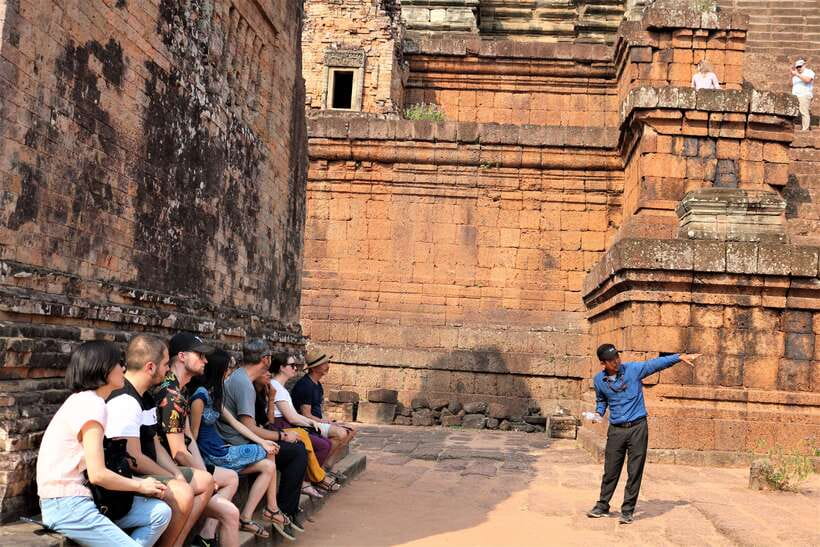
The best guiding style here combines facts with context. It explains why a gate has gods on one side and demons on the other, why Bayon’s faces matter, and how Khmer rulers used temples and reservoirs. Several guides also take group photographs, which is valuable for solo visitors and couples who want more than self-timer shots.
Walking, heat, clothing, and comfort
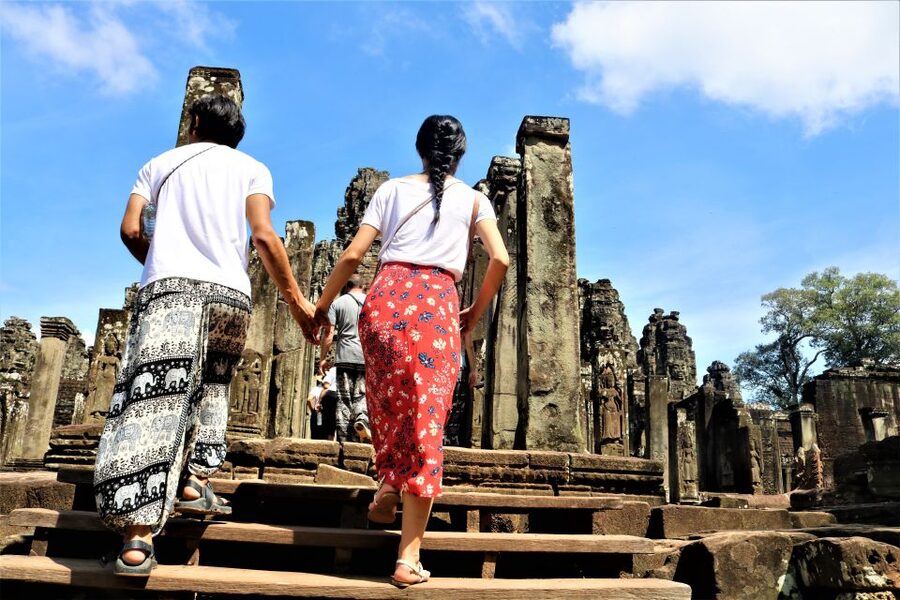
This is an eight-hour sightseeing day, not a gentle drive-by tour. You walk through large temple grounds, climb steps, cross uneven surfaces, and spend time in full sun. Even the most enthusiastic visitor may feel tired by the final stop.
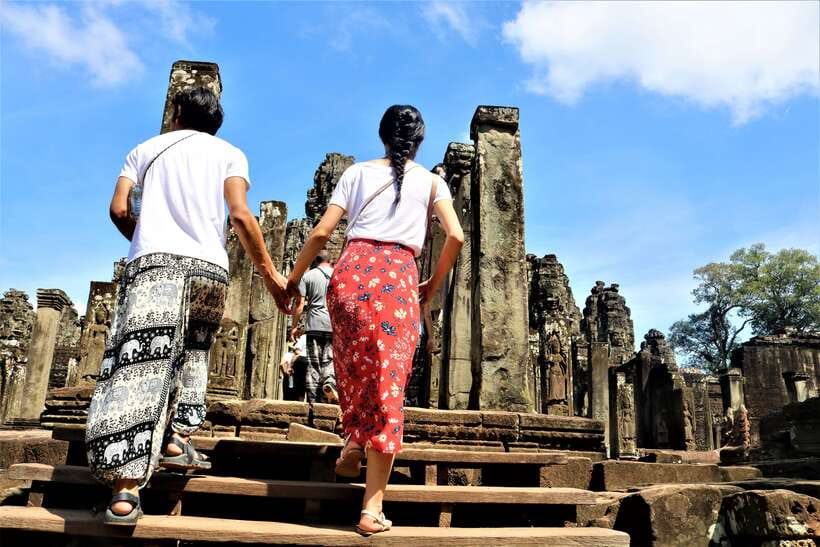
Pack comfortable shoes, sunglasses, a sun hat, and insect repellent. Bring a light, respectful outfit that covers your shoulders and knees. Skirts are specifically listed as not allowed, and temple access requires suitable coverage.
The air-conditioned vehicle gives you recovery time, but it does not remove the physical demands of Angkor. One useful habit is to drink water before you feel thirsty. The driver provides bottled water and cool towels, and past tours have also supplied refreshments at regular intervals.
The route is not suitable for children under five or wheelchair users. If heat, stairs, or uneven paths are a serious concern, a shorter or more customized visit may suit you better.
What the $17 price really means
At $17 per person, the tour price is strikingly low for eight hours of transport, guiding, hotel pickup, and visits to the main Angkor sites. The value improves if you want an organized introduction and do not want to arrange a tuk-tuk, driver, and guide separately.
But your actual minimum sightseeing budget is higher. The one-day Angkor Pass costs an additional $37 per person and covers the temples on this route. Lunch is also extra, so the realistic total is at least $54 per person before your meal and any drinks.
That is still a reasonable price for a full day, particularly when you count the air-conditioned vehicle, hotel transfers, bottled water, and towels. Just do not compare the $17 figure with the full cost of an independent day until you include the required pass.
The pass is payable on the day of the tour according to the supplied information. You do not need a passport for this activity.
Who should book this temple day?
I would choose this tour if you are visiting Siem Reap for the first time and want the major monuments explained in a logical order. It is also a good match for solo visitors, couples, and small families with older children who value a guide and easy transport.
You will get the most from it if you enjoy history, religious art, architecture, and photography. The guides can add much more than an audio recording, especially when you ask questions about carvings or Cambodian culture.
I would hesitate if your priority is complete independence, a slow photographic study, or avoiding all early starts. The day covers a lot of ground, and the most famous areas can be busy. You should also be ready for the possibility that the schedule gives you an overview rather than hours at each monument.
The free cancellation policy allows cancellation up to 24 hours before the start for a full refund, and the date can generally be amended up to seven hours before departure without an added charge. Confirm the pickup time, bring the correct clothing, and budget for the pass before you commit.
Should you book it?
Book this tour if you want Angkor’s essential sights without negotiating transport or trying to decode the temple complex on your own. The strongest reasons are the small groups, consistently praised guides, careful pacing, and simple comforts that matter after hours in the heat.
Skip it in favor of a private or shorter visit if you need total control of the schedule or dislike substantial walking. For most first-time visitors, though, the $17 tour price is good value once you understand the extra $37 pass and lunch cost. It gives you the essential Angkor story in one demanding but rewarding day.
FAQ
How long does the Angkor Wat temple tour last?
The activity lasts eight hours. The stated ending window is hotel arrival between 4:00 PM and 5:00 PM.
What temples and sites are included?
The route includes Angkor Wat, the southern gate of Angkor Thom, Angkor Thom City, Bayon Temple, the Terrace of the Elephants, the Terrace of the Leper King, Ta Prohm, and a break near Srah Srang.
Is the Angkor Pass included in the tour price?
No. A one-day Angkor Pass costs an additional $37 per person and is payable on the day of the tour.
Is lunch included?
No. Lunch is available at a local restaurant near the temples, but you pay for it separately.
What should I wear and bring?
Wear clothing that covers your shoulders and knees, along with comfortable shoes. Sunglasses, a sun hat, and insect repellent are recommended.
Is hotel pickup included?
Yes. Hotel pickup and drop-off in Siem Reap are included. The supplied information gives different pickup windows, so confirm your exact time with the operator one day before the tour.
Fresh reviews from around Siem Reap
- Full-Day Tour Preah Vihea & Koh Ker Temple 3.7 · 3 reviews
- Savor the Countryside: Tours with Authentic Cooking Classes” 5.0 · 3 reviews
- Angkor Wat Sunrise TukTuk Tour 5.0 · 3 reviews
- Angkor Grand Circuit Tour & Banteay Srei 5.0 · 3 reviews
- Guided Private Tuk Tuk Tour Angkor Wat and Small Circle and Five Extras 5.0 · 3 reviews
- Siem Reap Temple Tour 2-Day with Sunrise/Sunset 3.7 · 3 reviews
- Bangkok to Angkor Wat 2 Days 1 Night by Flight 4.5 · 3 reviews
- Kompong Pluk Tour 5.0 · 3 reviews
Angkor Temple Tours, compared.

Angkor Wat Sunrise or Sunset Tour with Guide from Siem Reap
Read our review →



Angkor Wat Sunrise tour with Small – Group and Guide tours
Read our review →
Angkor Wat Highlights and Sunrise Guided Tour from Siem Reap
Read our review →
