
Reviewed · FOOD & DRINK
Angkor Wat Experience Temple Pass and Siem Reap Food Tour
Angkor Wat is only the beginning here. This 13-hour Siem Reap tour pairs the great temple with Bayon, Ta Prohm, and jungle-set Ta Nei, then shifts gears for a five-stop food tour through lotus fields and rice paddies at sunset. You get ancient stone, local life, and Cambodian cooking in one carefully packed day.
I like the easy logistics: temple tickets, tuk-tuk transport, lunch, dinner, drinks, and hotel transfers are included. I also like the break between the temple visits and the evening food tour, since it gives your feet and your mind a chance to recover.
The main drawback is the length. Thirteen hours is a lot of time on the road and on foot, and the tour calls for moderate fitness. If you prefer slow mornings or long, quiet temple visits, this schedule may feel full.
In This Review
- Key things to know before booking
- One long day that connects temples and daily life
- Angkor Wat in the morning, 90 minutes with the great temple
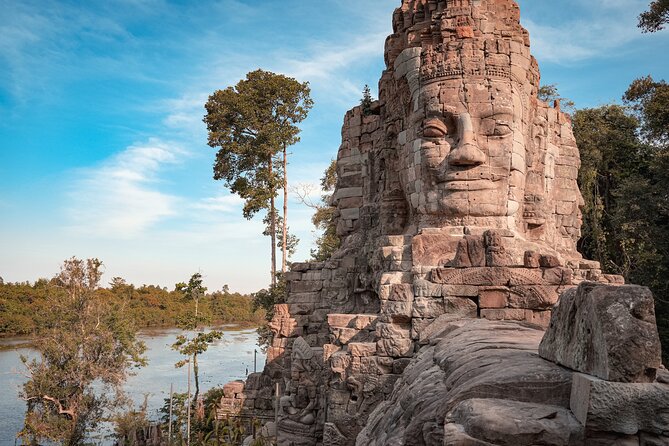
- Bayon and the stone faces of Angkor Thom
- Ta Prohm, roots, ruins, and the Tomb Raider connection
- Ta Nei, a quieter temple in the jungle
- Lunch in the temple area and a needed reset
- Sunset among lotus fields and rice paddies
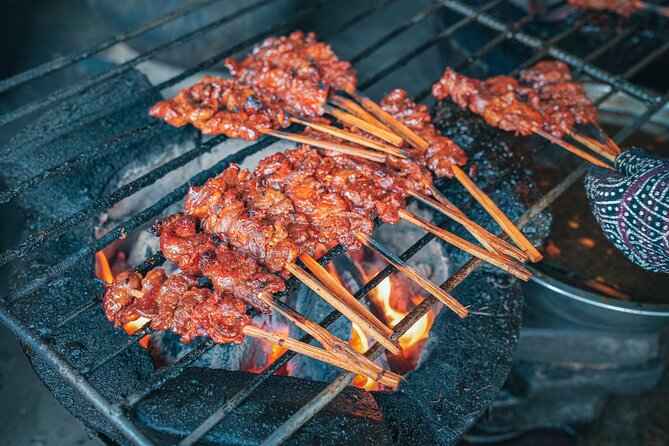
- More than a dozen dishes, with village and home visits
- Tuk-tuk transport, small groups, and the pace
- The guide can shape the whole experience
- Who should book this $155 experience?
- FAQ
- What time does the tour begin?
- How long does the experience last?
- Is hotel pickup included?
- Are temple entrance tickets included?
- Which temples are visited?
- Is transportation included?
- Are meals included?
- Are drinks included?
- How large is the group?
- Is the tour physically demanding?
- Can I cancel for a refund?
- Should you book it?
Key things to know before booking
- Four very different temples: Angkor Wat, Bayon, Ta Prohm, and jungle-covered Ta Nei each offer a distinct setting and mood.
- A proper pause between tours: You return to your hotel before the food portion, rather than pushing through one endless day.
- More than a quick snack stop: Lunch and dinner include more than a dozen dishes at local restaurants.
- A countryside sunset setting: The evening starts among lotus fields and rice paddies, with water buffalo and village scenery along the way.
- A small group of up to 12: This is easier to manage than a large coach tour, especially at temple entrances.
- Guide quality matters: Guides named Chan, Mony, Pom, Hok, Sann, and Pum have been praised for explaining Cambodian religion, history, daily life, and food.
One long day that connects temples and daily life
Many Angkor tours stop after the major temples. This one keeps going, but in a useful way. The morning explains the monuments that draw you to Siem Reap, while the evening helps you understand what food, villages, and rural life mean beyond the park.
Your day begins at 7:30 am with hotel pickup. The exact rhythm depends on your guide and the pace of the small group, but the plan is clear: visit four temples, eat lunch in the temple area, return for a rest, then head out again for dinner and countryside stops.
That structure is important. A full day of temple touring can become a blur of stone, steps, heat, and repeated architectural details. The food tour gives the day a second act. Instead of seeing only monuments, you get a broader look at Siem Reap and Cambodian life.
The price is $155 per person. That is not a budget half-day outing, but the value improves when you count what is bundled in: all temple admission, a full-day tuk-tuk and driver, an English-speaking local guide, lunch, dinner, unlimited bottled water and soft drinks, and hotel pickup and drop-off. You are paying for a long day with very little planning left for you to handle.
More Angkor temple itineraries:
- Angkor Wat Sunrise or Sunset Tour with Guide from Siem Reap
5.0 · 12,109 reviews - Siem Reap: Angkor Wat: Small-Group Sunrise or Sunset Tour
5.0 · 9,444 reviews - Siem Reap: Angkor Wat 2-Day Tour with Sunrise and Sunset
4.9 · 4,429 reviews
Angkor Wat in the morning, 90 minutes with the great temple
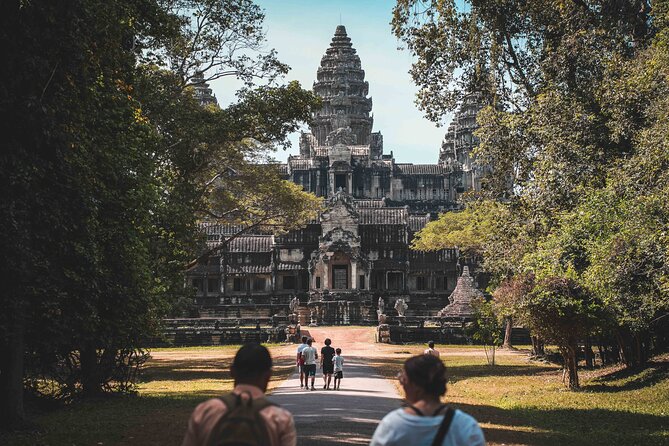
Angkor Wat gets the first serious look, and that is the right choice. The temple is at its most useful early in the day, before you have spent hours walking among ruins and before the itinerary becomes crowded with stops.
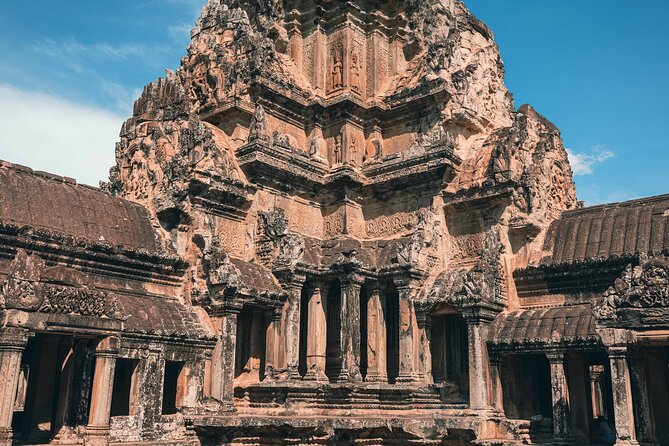
You spend about 90 minutes exploring the 12th-century complex. The tour focuses on the temple’s three iconic pagodas and its vast sandstone construction. You will hear that the project took more than 30 years and used roughly 5 million tons of sandstone, a scale that is hard to grasp until you are standing beside the walls.
A good guide makes the difference here. Rather than simply pointing out towers, a guide can explain how the temple’s design, carvings, and religious purpose fit together. Sann, Mony, Pom, Chan, Hok, and Pum are among the guides associated with this experience, and each has been singled out for clear explanations of Cambodian history, religion, culture, or food.
Ninety minutes is enough for an introduction, but it is not enough for every corridor and carving. If Angkor Wat is your main reason for coming to Cambodia, plan to return on another visit or arrange extra temple time. This tour gives you a strong first encounter, not an exhaustive study.
Bayon and the stone faces of Angkor Thom
The second temple stop is Bayon, with about an hour set aside. Its appeal is very different from Angkor Wat. Where Angkor Wat feels broad and ordered, Bayon is more enclosed and visually busy, with towers and carved faces appearing from different angles as you move through the site.
The short transfer by tuk-tuk is part of the experience. You see bits of the park and local movement between temples rather than spending the day inside an air-conditioned vehicle. The driver handles the route while the guide fills in the context, making the journey feel connected to the places you visit.
An hour at Bayon should work well for a first visit, especially after a longer opening stop. You will have time to look closely and ask questions without using all your energy before Ta Prohm. Still, uneven stone and crowded passages can make the stop more tiring than the clock suggests.
Ta Prohm, roots, ruins, and the Tomb Raider connection
Ta Prohm receives about 90 minutes, which gives you time to appreciate why it is one of the most memorable stops in the Angkor area. It is famous as the Tomb Raider temple, but its appeal is not only cinematic.
The temple’s stonework is tangled with trees and roots. That combination gives Ta Prohm a more raw, enclosed feeling than Angkor Wat. Walls appear to fade into the surrounding vegetation, and the site feels less like a restored monument and more like a ruin being slowly reclaimed by nature.
Your guide can help you separate fact from movie fame. The film connection is an easy entry point, but the temple is worth your attention even if you have never seen the movie. Look at the carved details, the changing views through doorways, and the way roots press against the old structure.
The drawback is that Ta Prohm can be a slow-moving stop when many people are in the same narrow spaces. The small group limit of 12 helps, but it does not remove the crowds. Wear shoes that can handle rough surfaces, and keep water close. Bottled water and soft drinks are supplied throughout the day.
More food experiences in Siem Reap:
- Siem Reap Evening Food Tour – Inclusive 5 stops Local Tastings
5.0 · 325 reviews - Old Siem Reap Sunset Food Tour by Tuk-tuk
5.0 · 311 reviews - Siem Reap: Street Food Experience by Tuk-Tuk
4.9 · 310 reviews - Siem Reap: Evening Food Tour with 10 Local Tastings
4.9 · 222 reviews
Ta Nei, a quieter temple in the jungle
Ta Nei is the tour’s less familiar temple stop. You spend about an hour here, seeing a site set among jungle surroundings rather than visiting only the best-known Angkor monuments.
That change of mood is valuable. Angkor Wat and Ta Prohm carry a strong sense of fame, while Ta Nei feels more like a discovery along the route. You can pay attention to the setting, the remaining stonework, and the contrast between a major monument and a smaller temple in a forested area.
Ta Nei also helps prevent the day from becoming a checklist of famous names. It gives your guide room to explain how the wider Angkor area extends beyond the three sites most people know. If you want only the headline temples, this stop may seem less essential. If you like quieter places and a little variety, it is one of the best parts of the morning.
Lunch in the temple area and a needed reset
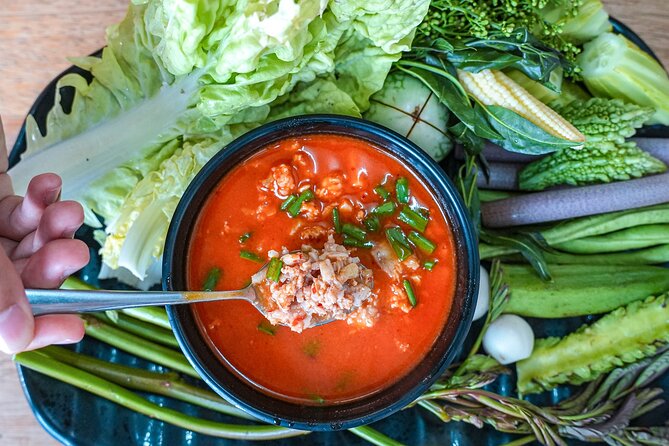
Lunch takes place in the temple area at an authentic local restaurant. The exact menu is not specified, but the tour includes lunch as part of the price, and the food program later in the day includes more than a dozen dishes across several stops.
This mid-day meal is not just a convenience. It keeps you from losing time searching for food between temple visits, and it gives the guide a natural chance to explain local ingredients or eating customs. Several guide assignments have been praised for connecting food with everyday Cambodian life, not treating it as an afterthought.
After the temple portion, you return to your hotel for some rest before the evening tour. That pause is one of the smartest features of the schedule. You can cool down, change clothes, charge your phone, and decide how much energy you have left for dinner.
Sunset among lotus fields and rice paddies
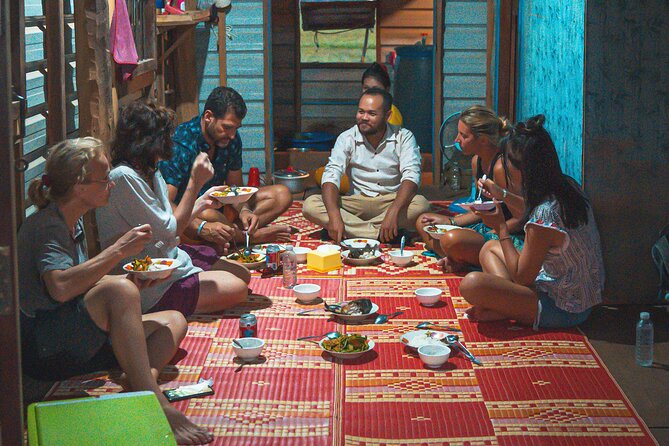
The food tour starts again after the break, with the evening portion described as beginning around 4 pm. Instead of returning to another major monument, you head into the countryside, where lotus fields and rice paddies create a calmer setting for the meal.
This is where the tour broadens beyond Siem Reap’s tourist center. You may see water buffalo and village life as the light changes, and the setting gives dinner a clear sense of place. A picnic meal at sunset sounds simple, but it can be more memorable than another restaurant in town because the setting connects the food to the land around Siem Reap.
The five-stop format also keeps the evening moving. You are not expected to sit down for one large meal and finish. You try different dishes and settings, with the guide explaining what you are eating and how it fits Cambodian culture.
You should be open to unfamiliar flavors and textures. The tour is built around trying local dishes, not selecting only the safest items on a standard tourist menu. If you have allergies, dietary restrictions, or strong dislikes, raise them before booking because the supplied information does not explain how special diets are handled.
More than a dozen dishes, with village and home visits
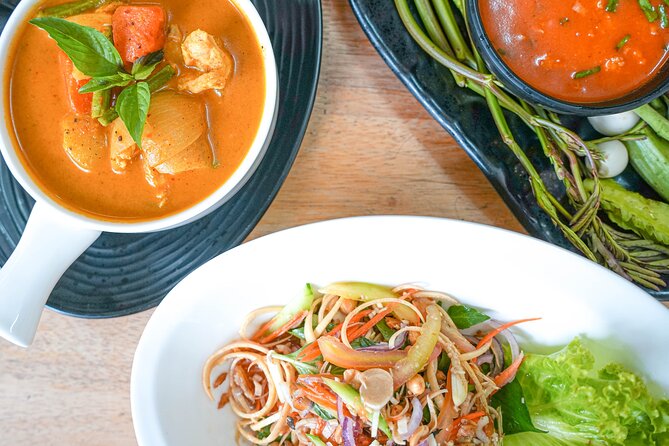
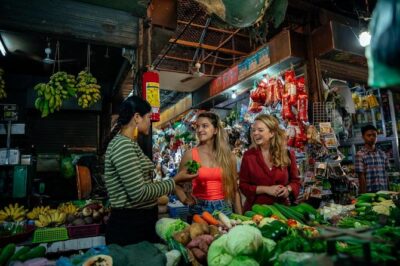
Dinner includes more than a dozen dishes across authentic local restaurants and food stops. The experience may also include a local village and the home of a resident named Mr. Vet, followed by a cocktail bar. These details can vary with the evening’s exact route, but they show the range intended by the food portion.
I like this approach because it gives food a social setting. You are not simply tasting dishes and moving on. You may also see where people live, hear about daily routines, and understand the difference between a restaurant meal and food connected to a family or village.
The food tour is likely to be the most personal part of the day. Temple explanations deal with centuries of religion and kings; the evening focuses on the present. That contrast makes the combined tour useful for a first visit, especially if you have only a short stay in Siem Reap.
The cocktail bar can be a pleasant finish, but it also means the day is not designed for an early night. If you have an early flight or sunrise plans the next morning, consider the effect of returning late after 13 hours of activity.
Tuk-tuk transport, small groups, and the pace
A tuk-tuk is the right vehicle for this route. You get open-air views between temple stops, and the short rides let you watch local life pass by. The tradeoff is exposure to heat, dust, and traffic, so this is not the same as traveling in a sealed private car.
The driver remains with you for the full day, and hotel pickup and drop-off are included. That removes the need to find separate transport to the Angkor area, organize a second ride for the food tour, or negotiate several fares.
The group can include up to 12 people. That is small enough for a guide to speak with the group and manage temple entrances, though it is not a private tour. If you book as a couple or family, you may share the tuk-tuk and meal stops with other people.
Moderate physical fitness is required. You will walk around temple grounds, cross uneven surfaces, and spend much of the day moving in warm conditions. The itinerary does not list accessibility details, so anyone needing step-free access should confirm suitability before booking.
The guide can shape the whole experience
The strongest part of this tour is the guide’s role. A good guide turns four temple stops into a story rather than four photo breaks. The guides connected with the experience include Hok, Sann, Mony, Chan, Pom, and Pum, and the strongest praise has focused on their explanations of temple history, Cambodian religion, local culture, daily life, and cuisine.
Chan is associated with an engaging temple morning and useful commentary on everyday Cambodian life. Mony has been praised for being professional, personable, and able to link food with the places you visit. Pom is known for a well-paced temple route, while Hok has been noted for explaining details that are easy to miss on your own.
You may not receive a particular guide, so do not book solely for one name. Still, the repeated emphasis on guide quality is meaningful. On a route this long, clear timing, good explanations, and a friendly manner can make the difference between a rewarding day and an exhausting one.
Who should book this $155 experience?
I would recommend it most strongly to first-time visitors with limited time in Siem Reap. You see the essential Angkor names, one less-visited temple, and a substantial introduction to Cambodian food without arranging separate tickets, drivers, restaurants, and transfers.
It also suits you if you enjoy variety. The day moves from grand stone temples to jungle ruins, then from a hotel rest to countryside food stops. You will not spend the whole day doing one kind of activity.
The tour is less suitable if you want to study Angkor Wat at length, avoid unfamiliar food, or set your own pace. Independent visitors who want several hours at one temple may find the scheduled stops too brief. The 13-hour duration also demands stamina.
At $155, I see solid value for someone who would otherwise book a temple guide, tuk-tuk, admission, lunch, dinner, drinks, and an evening food tour separately. The value is less obvious if you already have a driver, temple pass, and restaurant plans. For a short stay, though, the convenience and range are hard to match.
FAQ
What time does the tour begin?
The tour begins at 7:30 am.
How long does the experience last?
The full experience lasts approximately 13 hours.
Is hotel pickup included?
Yes. Hotel pickup and drop-off are included.
Are temple entrance tickets included?
Yes. Entrance tickets to all temples visited are included.
Which temples are visited?
The route includes Angkor Wat, Bayon Temple, Ta Prohm, and Ta Nei Temple.
Is transportation included?
Yes. Tuk-tuk transportation with an experienced driver is provided for the full day.
Are meals included?
Yes. Lunch and dinner are included. You will try more than a dozen dishes at authentic local restaurants and food stops.
Are drinks included?
Yes. Unlimited bottled water and soft drinks are included throughout the day.
How large is the group?
The tour has a maximum of 12 people.
Is the tour physically demanding?
A moderate level of physical fitness is required. The itinerary includes walking around several temple sites, and the experience lasts most of the day.
Can I cancel for a refund?
You can cancel at least 24 hours before the start time for a full refund. Cancellations or changes made less than 24 hours before the start time are not accepted for a refund.
Should you book it?
Book this tour if you want one organized day that covers Angkor’s major sights and Siem Reap’s food culture. The best reasons are the four contrasting temples, the break before the evening outing, the included meals and transport, and the chance to see countryside life at sunset.
Skip it if you need a relaxed schedule or want to spend most of your time at Angkor Wat alone. For everyone else, especially those on a short visit, this is a practical way to fit ancient monuments, local food, village scenery, and thoughtful guiding into one full day.
Fresh reviews from around Siem Reap
- Full-Day Tour Preah Vihea & Koh Ker Temple 3.7 · 3 reviews
- Savor the Countryside: Tours with Authentic Cooking Classes” 5.0 · 3 reviews
- Angkor Grand Circuit Tour & Banteay Srei 5.0 · 3 reviews
- Guided Private Tuk Tuk Tour Angkor Wat and Small Circle and Five Extras 5.0 · 3 reviews
- Angkor Wat Sunrise TukTuk Tour 5.0 · 3 reviews
- Siem Reap Temple Tour 2-Day with Sunrise/Sunset 3.7 · 3 reviews
- Bangkok to Angkor Wat 2 Days 1 Night by Flight 4.5 · 3 reviews
- Kompong Pluk Tour 5.0 · 3 reviews
Food & Drink, compared.
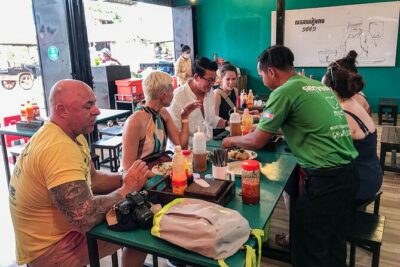
Siem Reap Evening Food Tour – Inclusive 5 stops Local Tastings
Read our review →
The 10 Tastings of Siem Reap With Locals: Private Street Food Tour
Read our review →
Ultimate Siem Reap Food Tour (10 Locals Tasting with Drinks & Transport)
Read our review →
Browse the lists this tour appears in