
Reviewed · SILK FARM & ARTISAN WORKSHOPS
Angkor Silk Farm & Lotus Silk Farm: Siem Reap Discovery Tour
Cambodia’s textile story becomes much clearer when you see both ends of it in one morning: silkworm cultivation at Angkor Silk Farm and hand-pulled lotus fiber at Samatoa Lotus Farm. The first draws on old Khmer craft, while the second turns an ordinary lotus stem into an unusually delicate thread.
I like the clear contrast between the two farms, and I like that your $25 fee supports social enterprises working with local women. The live demonstrations also make this more than a museum visit. You see cocoons, thread, looms, and lotus stems in use.
The main drawback is the road time between the farms. One part of the drive can feel long and hot, especially if you are sharing transport or visiting during the warmer hours. Go for the craft lessons, not for a packed schedule of sightseeing stops.
In This Review
- Key points to know before you go
- Why these two farms belong in the same morning
- Starting at Biolab Café in downtown Siem Reap
- Angkor Silk Farm: following thread from leaf to loom
- The first boutique: useful shopping, not a forced purchase
- The countryside drive between the farms
- Samatoa Lotus Farm: the more unusual process
- Lotus tea, biscuits, and a quiet garden break
- How the shopping compares at both farms
- What the $25 price really buys you
- Who will enjoy this most
- Practical booking advice for a smoother morning
- Should you book this Siem Reap textile tour?
- FAQ
- Where does the tour start and finish?
- How long does the experience last?
- What languages are available?
- Is lunch included?
- Can I buy products at the farms?
- Are hands-on craft activities included?
Key points to know before you go
- Silkworms at every stage: See mulberry cultivation, cocoons, thread extraction, and the silkworm life cycle at Angkor Silk Farm.
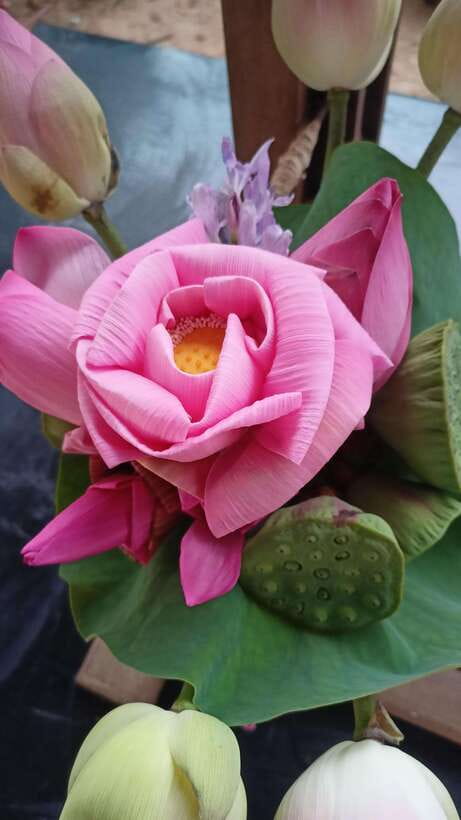
- Lotus fiber is pulled by hand: Samatoa artisans draw fine strands from lotus stems, then turn them into an unusual textile.
- Two distinct craft traditions: One farm preserves established silk methods; the other tests how local natural materials can serve modern sustainable production.
- Tea and biscuits are included: The lotus farm provides a short refreshment break in its garden.
- Shopping supports the workshops: Both farms sell handmade textiles and other products, but purchases are extra.
- Plan around the meeting point: Pickup and return are at Biolab Café in central Siem Reap, not at your hotel.
Why these two farms belong in the same morning
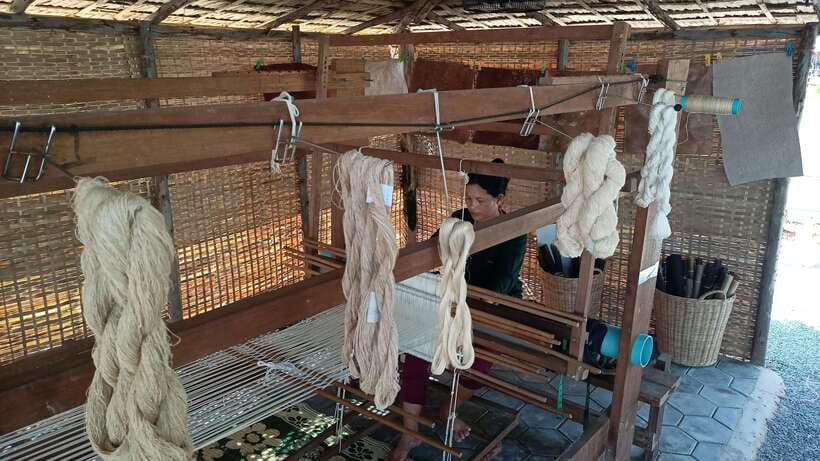
Many textile visits show you one finished product and a shop. This outing gives you a useful comparison. At Angkor Silk Farm, you follow a familiar but still remarkable natural process. Silkworms feed on mulberry leaves, form cocoons, and provide the raw material for fine thread.
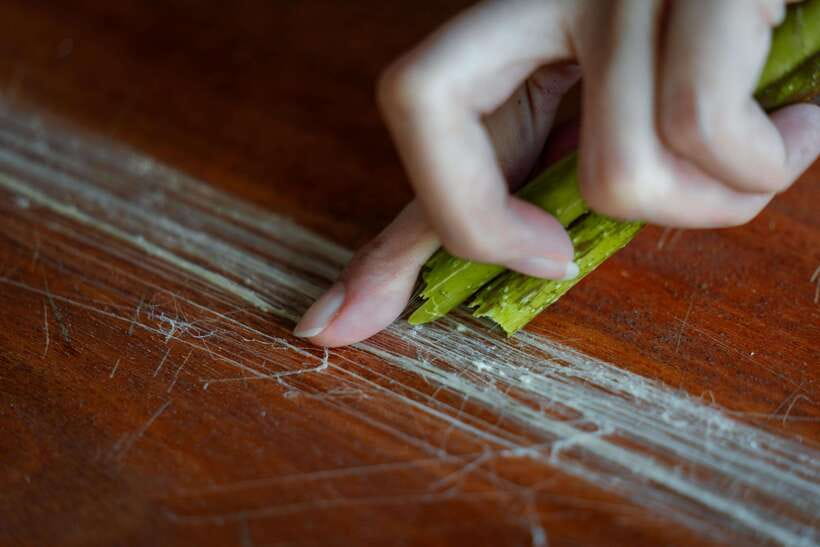
At Samatoa Lotus Farm, the raw material is completely different. Artisans work with lotus stems, extracting slender fibers before twisting and preparing them for textile production. The method is slow and careful, which helps explain why lotus products cost more than factory-made cloth.
I find that contrast especially helpful if you are interested in sustainability. The lotus process is not simply a new souvenir idea. It shows how a local plant can support skilled work while reducing reliance on mass production. You also see the limits of handmade goods: time, labor, and care affect the final price.
Both enterprises connect craft with employment. Your visit, and any purchase you make, helps keep practical skills in use and directs money toward local production rather than only imported souvenirs.
More silk farm and artisan visits:
- Siem Reap Lotus Silk Farm Discovery tour & Lake experience
4.7 · 291 reviews - Siem Reap: Lotus Silk Farm- Tour, Lake & Masterclass
4.9 · 77 reviews - Siem Reap: Silk Farm & Countryside Offbeat Jeep Tour
4.5 · 11 reviews
Starting at Biolab Café in downtown Siem Reap
The meeting point is Biolab Café, a garden café in central Siem Reap. Look for the lotus-colored flag marked PICKUP, Lotus Silk Farm, and a grey vehicle outside. Arrive about 10 minutes before departure so you are not trying to find the café as the car is leaving.
The café has air conditioning, seating, restrooms, drinks, and free WiFi. That is useful if you arrive early or need a cool place to wait. Hotel pickup is not included, so allow time to reach the meeting point by tuk-tuk or on foot, depending on where you are staying.
Morning departures are listed at 8:30 AM and 10:00 AM. The full experience lasts about four hours, including driving. The tour may be shared with other people, so the feel can range from a small private outing to a more social group ride.
Transport is described as a private car, though some bookings may involve shared arrangements. If you care about having the vehicle entirely to yourself, confirm that point before booking.
Angkor Silk Farm: following thread from leaf to loom
The advertised route begins at Angkor Silk Farm, with about 45 minutes for the guided visit. This is the more traditional half of the experience, and it gives you the basic vocabulary needed to understand Cambodian silk.
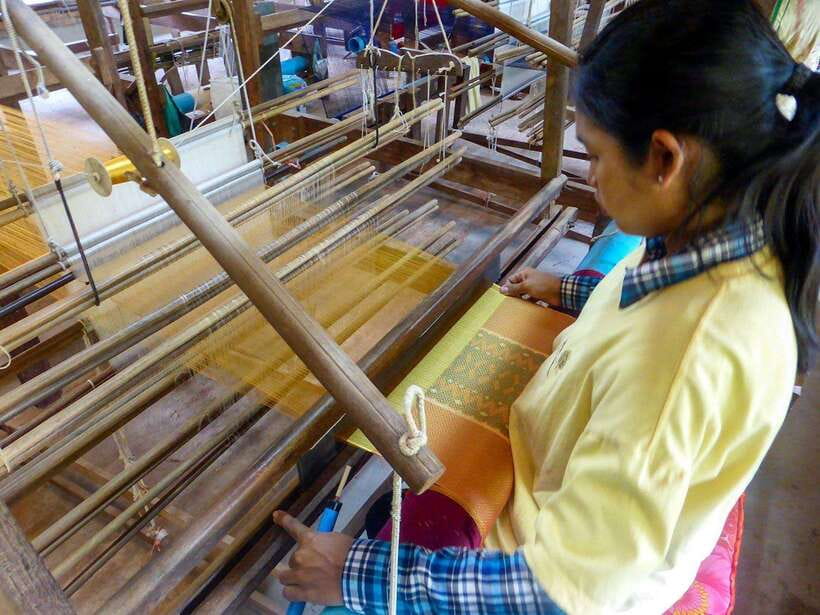
You begin with the source material. Mulberry cultivation supports the silkworms, and the guide explains how the insects develop through their different stages. Seeing the worms, cocoons, and working areas in sequence makes the process easier to grasp than a simple talk about silk.
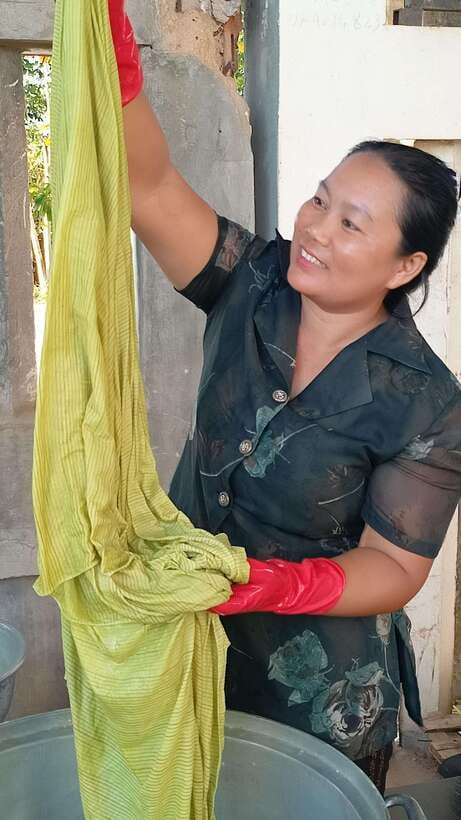
The cocoon is the key object here. Fine filaments are drawn out and prepared for weaving, turning a small natural structure into a long, usable thread. The work requires patience and repeated handling, which is easy to overlook when you see only a finished scarf in a shop.
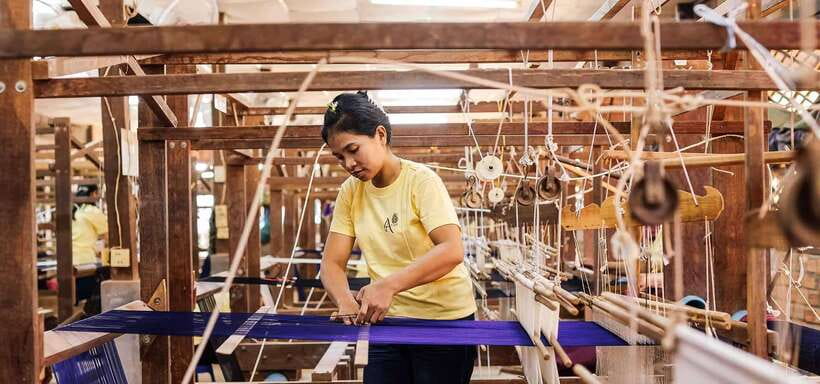
The tour also includes demonstrations of traditional wooden looms. Watch the weavers build patterns by hand, with techniques passed through generations. This is where the craft becomes cultural rather than merely industrial. The loom is not just a machine. It carries a working tradition, a design language, and a source of income.
You should have plenty of photo opportunities, and photography is allowed at both farms. Still, take time to watch the hands at work. A close look at the rhythm of weaving tells you more than a quick picture of the finished cloth.
Some people will prefer this stop because the process is familiar yet surprisingly intricate. Others may find the lotus farm more unusual. If your main interest is classic silk production, Angkor Silk Farm may be the highlight.
The first boutique: useful shopping, not a forced purchase
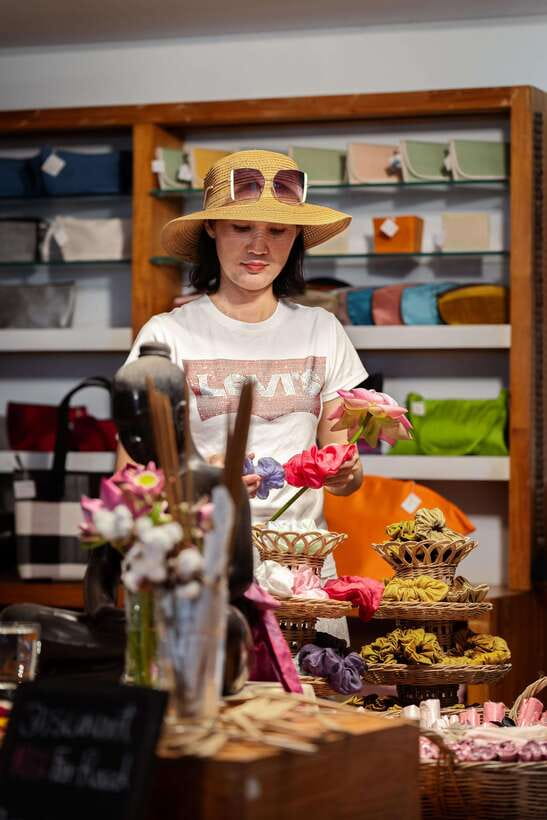
After the guided visit, about 15 minutes are set aside for shopping. The boutique offers handmade silk products, and buying something directly from the farm gives you a clearer connection to the work you have just seen.
Do not feel that you need to purchase anything. The value of the stop is that you can compare the quality, texture, and finish of the goods with what you encounter elsewhere in Siem Reap. If you do plan to shop, bring cash. US dollars are accepted.
The short shopping period is enough for a look, but not for a slow, detailed buying session if the group is large. You may want to decide in advance whether you are searching for a scarf, fabric, or small gift. That keeps the stop focused.
More Angkor temple itineraries:
- Angkor Wat Sunrise or Sunset Tour with Guide from Siem Reap
5.0 · 12,109 reviews - Siem Reap: Angkor Wat: Small-Group Sunrise or Sunset Tour
5.0 · 9,444 reviews - Siem Reap: Angkor Wat 2-Day Tour with Sunrise and Sunset
4.9 · 4,429 reviews - Siem Reap: Full-Day Angkor Wat Guided Tour with Sunset
4.9 · 3,803 reviews
The countryside drive between the farms
The transfer to the lotus farm takes you beyond central Siem Reap and into the countryside. You get glimpses of rural Cambodia along the way, but this is transport rather than a guided village tour. There are no scheduled detours or extra stops.
The road section is the least exciting part for some people. The journey can feel long after the first few minutes, and heat makes the ride harder. Air-conditioned car transport helps, but you should still wear light clothing and bring sun protection.
I would not book this outing expecting a string of scenic photo stops. Book it because the two farms are far more rewarding together than either one is alone. The drive links them, but it is not the main event.
The order may occasionally change to suit timing or local arrangements. The standard plan places Angkor Silk Farm first, but some departures have visited the lotus farm before the silk farm. That change does not alter the main content, though it can affect the pace of your morning.
Samatoa Lotus Farm: the more unusual process
The lotus farm receives about 30 minutes for its guided visit, followed by tea and shopping. This is the innovative part of the outing, and it often makes the strongest impression because lotus fiber is less familiar than silk.
Your guide explains how artisans extract fibers from lotus stems. The strands are pulled out by hand, then gathered and prepared for later textile work. The process is delicate and labor-heavy. It is also a good reminder that the phrase sustainable textile does not mean effortless textile.
The farm’s work supports local women and uses a material tied closely to Cambodia’s natural and cultural setting. You can see how a social enterprise combines employment, craft training, and new product development. The model is different from the long-established silk process, but both rely on skilled hands.
Some visits include optional small craft activities, such as trying to make a lotus thread, a sheet of paper, or a bracelet from lotus-related materials. These activities are not part of the $25 package and cost extra. Ask about the price before joining.
That extra charge may be worthwhile if you like hands-on learning, especially when visiting with children or family. It gives you a better sense of how difficult it is to make an even strand. If you want to keep the cost down, the demonstrations alone still explain the process well.
Lotus tea, biscuits, and a quiet garden break
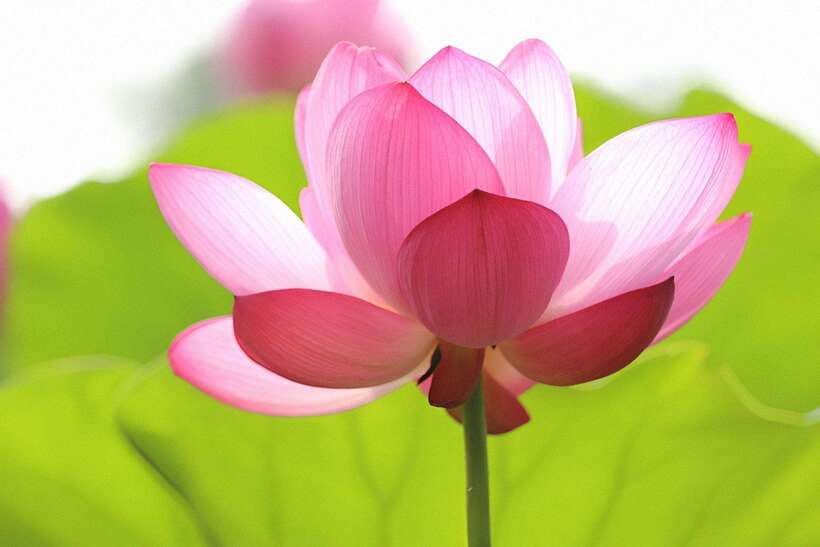
After the demonstration, you receive complimentary lotus tea and biscuits. This is a short break, not a full meal. Food, extra drinks, and lunch are not included in the standard price.
The tea stop gives the morning a calmer rhythm. Instead of moving directly from one explanation to another, you have time to sit, look around the garden, and think about the work you have seen. The setting also makes the lotus theme feel more connected to daily life rather than just a sales pitch.
Some bookings have added lunch at the lotus farm, including meals made with lotus ingredients. That is an optional arrangement, not something to assume is included. If lunch matters to you, ask when booking and budget separately.
The farm also has free WiFi and restroom facilities. Both farms provide restrooms, which is useful during a four-hour outing with a rural transfer.
How the shopping compares at both farms
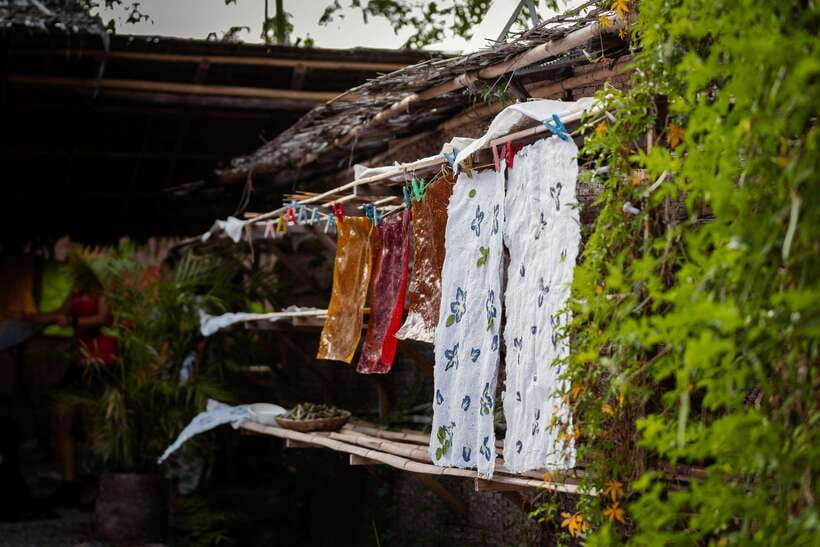
Each boutique serves a different purpose. At Angkor Silk Farm, you can look for traditional silk goods connected to the cocoon-to-loom process. At the lotus farm, you will find products made from the newer fiber and other handmade items linked to the enterprise.
Prices may seem high beside factory-made souvenirs. That comparison is not quite fair. The tours show you why: the material is gathered or processed by hand, and the work takes time at nearly every stage.
I like shopping after the demonstrations because you can make an informed choice. You have seen the raw material, watched the artisans work, and heard about the social purpose behind the production. A purchase becomes a direct way to support the craft, but it is never required.
Set aside extra money if you hope to buy something. The tour price covers the visits and included refreshments, not souvenirs, personal expenses, or optional activities.
What the $25 price really buys you
At $25 per person, this is a strong-value half-day outing if you want an organized introduction to Cambodian textiles. The fee covers both guided farm visits, English or French explanations, live demonstrations, car transport between locations, and lotus tea with biscuits.
The value comes from the comparison. A single farm visit might explain one technique well, but two farms show how Cambodia’s textile work moves from an established silk tradition toward experimental natural fibers.
You also save the effort of arranging separate transport to two out-of-town sites. The driver handles the route, and the guide keeps the visit moving. Several departures make it easier to fit around other Siem Reap plans.
The price does not cover hotel pickup, lunch, drinks beyond the lotus tea, purchases, or extra craft sessions. Read it as a focused educational tour, not an all-day sightseeing package.
Who will enjoy this most
I would recommend the tour to anyone interested in textiles, design, handmade goods, local employment, or environmental ideas. It also suits people who want to see rural Cambodia without committing to a full countryside excursion.
Families can enjoy the visible stages of the work, and optional craft activities may add a practical element for older children. Children must be accompanied by an adult.
The outing is suitable for all ages and fitness levels, with walking around the farms and transport between them. Wear comfortable shoes, light clothes, a hat, and sunscreen. Photography is allowed, so bring a camera if you enjoy documenting working processes.
It is less suitable if you dislike driving between stops or want a day packed with major monuments. It is also not the right choice if you expect a full lunch, a private photo session, traditional costumes, or an extensive weaving workshop. Those extras are not included.
Practical booking advice for a smoother morning
Choose the earlier departure if you prefer to avoid some of the day’s heat. The 8:30 AM and 10:00 AM options give you flexibility, but you should arrive 10 minutes early at Biolab Café.
Ask about the transport arrangement if you are particular about privacy. The experience may be shared, and the drive between farms is the longest uninterrupted part of the morning.
Bring cash in US dollars for the boutiques and optional activities. Keep your expectations clear: you will watch demonstrations and see the working areas, but a full hands-on weaving workshop is not included.
The tour operates in all weather conditions. Free cancellation is available up to 24 hours before departure, and you can reserve now and pay later, which helps if your Siem Reap schedule is still shifting.
Should you book this Siem Reap textile tour?
Book it if you want a thoughtful half-day focused on how things are made. Angkor Silk Farm gives you the classic silk story, while Samatoa Lotus Farm shows a less familiar experiment in natural fiber and social enterprise. Together, they offer more insight than a standard souvenir stop.
The biggest tradeoff is the drive between the farms. If that sounds tiring, choose the tour only if the craft demonstrations matter to you. If you enjoy seeing skilled work up close, comparing old and new methods, and buying directly from local producers, the $25 price is sensible.
I would make this a particularly good choice for a culture-focused morning before returning to Siem Reap for lunch or an afternoon rest. Just remember that lunch, hotel transport, and optional craft activities require extra planning.
FAQ
Where does the tour start and finish?
The tour starts and ends at Biolab Café in downtown Siem Reap. Hotel pickup and drop-off are not included.
How long does the experience last?
The total duration is about four hours, including transport between the farms. Morning departures are listed at 8:30 AM and 10:00 AM.
What languages are available?
The tour is conducted in English or French with a live guide.
Is lunch included?
No. The standard tour includes lotus tea and biscuits at Samatoa Lotus Farm, but lunch, meals, and additional drinks are not included.
Can I buy products at the farms?
Yes. Both farms have boutiques selling handmade products. Purchases and souvenirs are not included in the tour price, and US dollars are accepted.
Are hands-on craft activities included?
No. The standard visit includes demonstrations, but optional activities such as making lotus thread, paper, or bracelets cost extra. Silk weaving workshops and private demonstrations are also not included.
More Farms in Siem Reap
- Siem Reap: Khmer Village and Fish Farm ATV Tour
4.9 · 266 reviews - Siem Reap: Khmer Water Blessing by Monk and Lotus Farm Visit
5.0 · 15 reviews - Half Day Trip: Silk Farm, Satcha, and Senteur d’Angkor Tour
4.7 · 10 reviews - Traditional Khmer Water Blessing by Monk and Lotus Farm Visit
5.0 · 10 reviews
Fresh reviews from around Siem Reap
- Full-Day Tour Preah Vihea & Koh Ker Temple 3.7 · 3 reviews
- Savor the Countryside: Tours with Authentic Cooking Classes” 5.0 · 3 reviews
- Angkor Grand Circuit Tour & Banteay Srei 5.0 · 3 reviews
- Guided Private Tuk Tuk Tour Angkor Wat and Small Circle and Five Extras 5.0 · 3 reviews
- Angkor Wat Sunrise TukTuk Tour 5.0 · 3 reviews
- Siem Reap Temple Tour 2-Day with Sunrise/Sunset 3.7 · 3 reviews
- Bangkok to Angkor Wat 2 Days 1 Night by Flight 4.5 · 3 reviews
- Kompong Pluk Tour 5.0 · 3 reviews
Silk Farm & Artisan Workshops, compared.
Siem Reap Lotus Silk Farm Discovery tour & Lake experience
Read our review →


Banteay Chhmar Temple & Silk Farm Private Day Trip from Siem Reap
Read our review →
Tuk Tuk Journey: Exploring Rural Life and Silk Farm Craftsmanship
Read our review →Browse the lists this tour appears in