
Reviewed · ANGKOR TEMPLE TOURS
7-must See Temples in Angkor Park (Private Guided Tour)
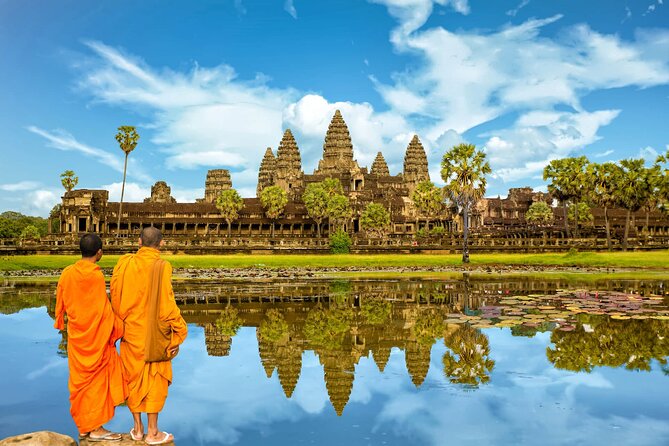
Angkor Park is so large that choosing seven temples can save you from spending the day wandering between sites. This 6 to 7-hour private tour gives you the big names, from Angkor Wat at sunrise to the smiling faces of Bayon, while also adding Banteay Srei and Neak Pean.
I like the early start, which gives you a better chance of seeing Angkor Wat before the heat builds. I also like the practical care: air-conditioned transport, bottled water, cool towels, and a guide who can explain what you are seeing instead of leaving you with a pile of impressive stones and no story.
The main drawback is the pace. Seven temples plus a breakfast stop is a full morning and early afternoon, and Banteay Srei sits farther from the central temple group. You will see a lot, but this is not a slow, quiet day at each monument.
In This Review
- Key points to know before booking
- Starting before sunrise at Angkor Wat
- Ta Prohm and the power of a familiar movie setting
- Breakfast and coffee beside Srah Srang
- Pre Rup, a compact brick temple with a different look
- Banteay Srei and its finely cut pink sandstone
- Neak Pean, a small temple reached by a longer approach
- Bayon and the famous stone faces
- Angkor Thom’s South Gate, a quick but worthwhile stop
- What the private format really adds
- Price, tickets, and what you actually pay
- Who will get the most from this Angkor route
- Should you book the seven-temple tour?
- FAQ
- How long does the tour last?
- Is the temple ticket included?
- What temples and sites are included?
- Is this a private tour?
- Is hotel pickup offered?
- What does the tour include?
- Can I cancel for a full refund?
Key points to know before booking

- Angkor Wat begins at sunrise, so prepare for an early pickup and a short wait while temple tickets are arranged.
- Seven major temples are covered, with Angkor Thom’s South Gate added as a bonus stop.
- Banteay Srei requires extra driving, but its finely carved pink sandstone makes the detour worthwhile.
- The tour is listed as private, meaning only your group participates, although the itinerary wording about picking up other travelers is worth confirming.
- The guide makes a real difference, with Sophal and Nek specifically praised for clear explanations, patience, and good pacing.
- Budget another $37 per person for temple admission, plus your own breakfast, food, and drinks.
Starting before sunrise at Angkor Wat
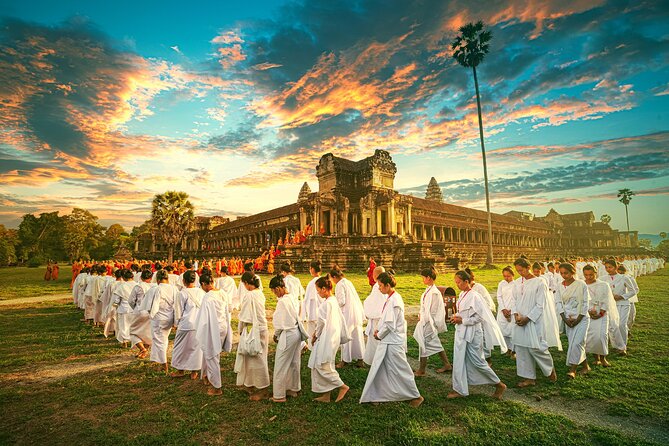
The day begins with pickup in Siem Reap and a trip to Angkor Wat. The plan is to buy temple tickets before walking in for sunrise, though one useful tip is to arrange the pass ahead of time if possible. A message sent the day before advised doing this to save time, and it is sensible advice when every minute before dawn counts.
Angkor Wat is the star attraction for good reason. Its towers and long galleries are especially striking in the changing light, and the scale becomes clear as you walk toward the central temple. You have about two hours here, enough to see the main areas without treating the building like a quick photo stop.
Your guide can give shape to the visit. The stone carvings, galleries, towers, and courtyards are easier to appreciate when someone points out what matters and explains how the temple was used. Guides named Sophal and Nek have been praised for their clear explanations, but your assigned guide may be different.
Sunrise also brings the busiest moment of the day. Do not expect solitude around the famous viewing spots. Still, an early start has two clear benefits: the cooler air and the chance to see Angkor Wat before the strongest heat arrives.
The temple ticket is not included. Admission is listed at $37 per person, so add that to the $65 tour price. Your practical total starts at about $102 per person before breakfast and other drinks.
More Angkor temple itineraries:
- Angkor Wat Sunrise or Sunset Tour with Guide from Siem Reap
5.0 · 12,109 reviews - Siem Reap: Angkor Wat: Small-Group Sunrise or Sunset Tour
5.0 · 9,444 reviews - Siem Reap: Angkor Wat 2-Day Tour with Sunrise and Sunset
4.9 · 4,429 reviews
Ta Prohm and the power of a familiar movie setting
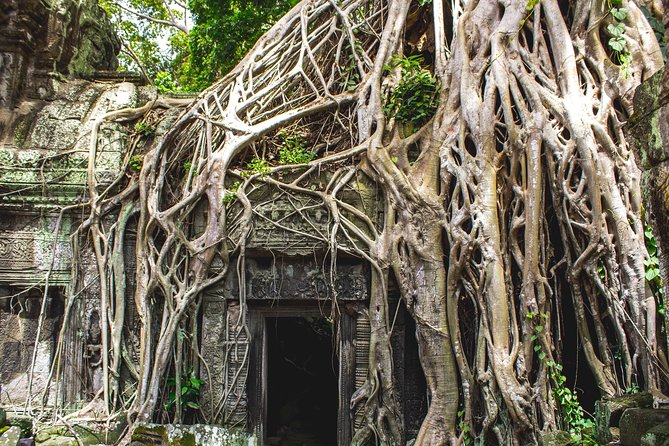
After Angkor Wat, the route continues to Ta Prohm for about an hour. This is the temple associated with Angelina Jolie’s Tomb Raider, and that connection has made it one of the most recognizable places in Angkor Park.
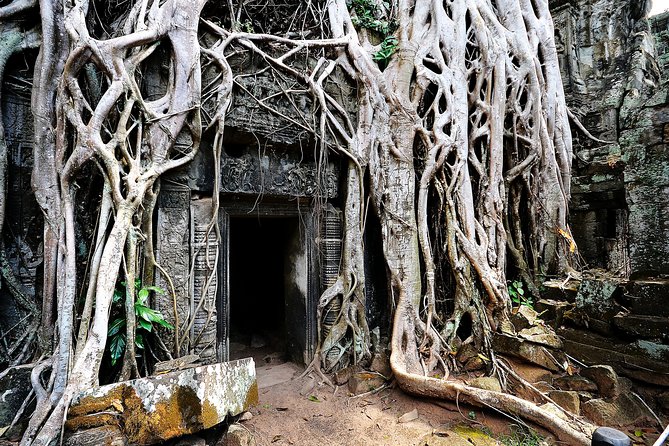
The film link is only part of the appeal. Ta Prohm has a rough, atmospheric look, with trees growing around and over parts of the stone structure. It feels less orderly than Angkor Wat, and that contrast makes the visit useful. You see another side of the Angkor complex, one where nature and old masonry appear to be in an ongoing argument.
One hour is a reasonable amount of time here. You can walk through the main sections, stop for photographs, and listen to your guide without turning the visit into a race. The paths can feel crowded at popular points, so having a guide helps you keep moving toward less obvious views instead of waiting too long in one place.
Ta Prohm is listed with no separate admission charge because it is covered by the Angkor temple pass. Keep that pass with you throughout the day.
Breakfast and coffee beside Srah Srang
Srah Srang is the planned break after Angkor Wat and Ta Prohm. You have about 45 minutes for breakfast and coffee before continuing.
This is a useful pause, not filler. The first two temples require walking, standing, and early-morning concentration. A drink and a proper bite give you a chance to reset before the route moves farther across the park.
Food and drinks are not included, so plan to pay for your own meal. The provided bottled water and cool towels help with the heat, but they do not replace breakfast. If you prefer a quiet morning, keep this stop practical and do not let it expand too much. Seven sites still remain on the schedule.
Pre Rup, a compact brick temple with a different look
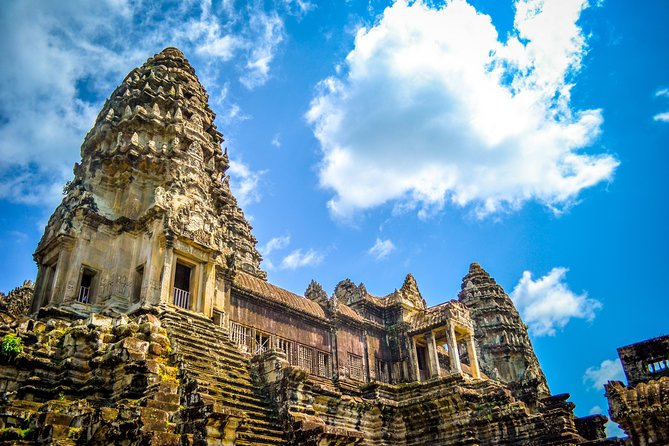
Pre Rup receives about 20 minutes, making it one of the briefest stops. It is a 10th-century temple built mainly from brick, with sandstone and laterite also used in its construction.
This stop works as a visual change from the larger and more famous monuments. The warm brick gives Pre Rup a different texture, and its compact form is easier to understand in a short visit. Your guide can explain the building materials and the temple’s place in the Angkor period while you make a quick circuit.
Twenty minutes will not allow a detailed exploration. That is the tradeoff. You are getting a useful overview of a less famous temple rather than spending the whole day at only the headline sites.
Other Siem Reap experiences to weigh up
- Full-Day Angkor Wat Sunrise Private Tour with Guide from Siem Reap
5.0 · 2,920 reviews - Siem Reap: Angkor Wat Private Tuk-Tuk Tour
4.9 · 2,222 reviews - Angkor Wat Private Day Tour from Siem Reap
5.0 · 834 reviews - Angkor Wat Private Tuk-Tuk Tour (sunrise Option) & more
5.0 · 439 reviews
Banteay Srei and its finely cut pink sandstone
Banteay Srei gets about 45 minutes and is one of the most important stops on this route. It is known for its pinkish sandstone and unusually fine carvings.
The temple is smaller than Angkor Wat, but its decoration rewards close attention. Look at the carved details rather than judging the site by size. The stonework is the reason this temple earns its place on a seven-temple route.
Banteay Srei also requires more driving than the central temples. That makes the air-conditioned vehicle especially useful. You give up some time on the road, but in return you see a temple with a very different character from the monumental buildings closer to Siem Reap.
The 45-minute visit is enough for a focused look. If intricate carving interests you, this may be one of the day’s strongest stops. If you want long walks and huge courtyards, it may feel short.
Neak Pean, a small temple reached by a longer approach
Neak Pean receives about 40 minutes. The name is often associated with a small temple set within a distinctive water-centered design, and the approach helps make it different from the large stone complexes.
This is a good place to slow your eye down. Instead of a giant enclosure or towering gateway, you get a more contained setting and a change in the rhythm of the day. The walk from the vehicle may make the stop feel longer than the temple itself, so use the time to take in the setting as well as the structure.
The temple pass is needed, but there is no separate fee for this stop once you have the pass. As with the other sites, your guide can help explain why the design differs from what you saw earlier.
Bayon and the famous stone faces
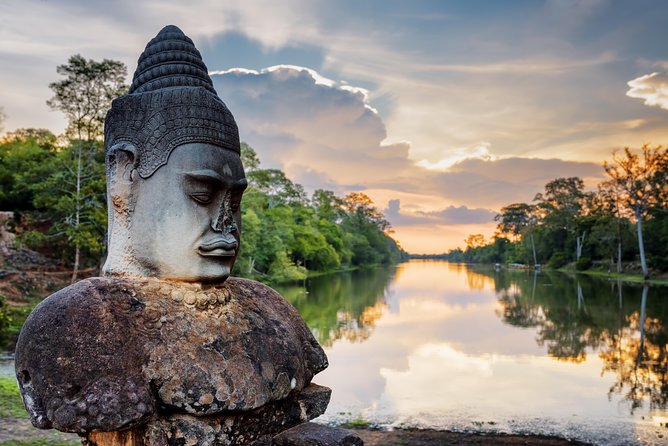
Bayon is scheduled for about an hour and comes after the sunrise visit to Angkor Wat. That order makes sense. You begin with Angkor Wat’s long views and formal scale, then later see Bayon’s crowded towers and carved faces.
The faces are the reason most people remember Bayon. They appear from different angles as you move through the temple, and the effect changes as you walk around the towers. Your guide’s role matters here because the site can seem confusing at first. A good explanation helps you understand the layout and notice details you might otherwise pass by.
An hour gives you enough time to see the main sections and take photographs without rushing every step. Bayon can be one of the busiest stops, so listen for your guide’s meeting instructions and stay aware of the group.
Angkor Thom’s South Gate, a quick but worthwhile stop
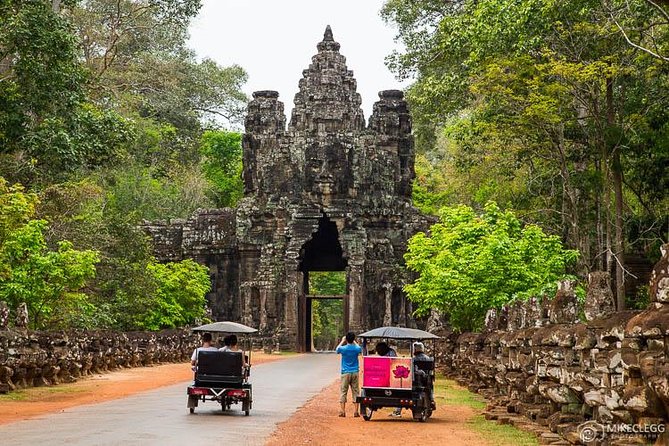
The final temple-area stop is the South Gate of Angkor Thom, with about 10 minutes set aside. Angkor Thom was the former capital of Cambodia, and the gate gives you a sense of the larger city that Bayon once served.
Ten minutes is brief, but this is a sensible photo and orientation stop. You can see the approach to the former capital and connect the gate with the monumental city center you have just visited. It is not a full exploration of Angkor Thom, so keep your expectations in check.
The gate is included under the temple pass. Afterward, the vehicle returns you to your hotel.
What the private format really adds
The experience is described as a private activity, with only your group participating. That is valuable at Angkor because the best pace depends on your group’s walking speed, interest in carvings, and tolerance for early mornings.
The itinerary also says the guide and driver pick up all other travelers before ticket purchase. That wording does not fully match the private-tour description, so I would confirm the pickup arrangement before booking. You should know if the vehicle is collecting only your party or making several hotel stops.
The strongest part of the setup is the separation between driving and guiding. You ride in an air-conditioned vehicle while an English-speaking guide handles the explanations. Bottled water and cool towels are small touches, but they matter after several temple visits in tropical heat.
The tour has received a 5 out of 5 rating from 25 reviews, with 100 percent recommending it. That is a small sample, so I would not treat the number as a guarantee. Still, the repeated praise points to the same useful strengths: friendly service, good communication, clear temple explanations, photo help, and a relaxed pace.
Price, tickets, and what you actually pay
The tour costs $65 per person. Temple admission costs another $37 per person, bringing the basic cost to about $102 before meals and drinks.
That is fair value if you want a private vehicle, an English-speaking guide, and a carefully selected route. Hiring transport alone may cost less, but then you must manage the route and learn the meaning of each site yourself. A larger group tour may also have a lower price, but you lose control over the pace and group size.
The value is strongest for first-time visitors with only one day for Angkor Park. You get the most famous temple, two especially distinctive sites in Ta Prohm and Banteay Srei, plus several smaller or less familiar monuments.
The value is weaker if you already know Angkor well or prefer to spend half a day at only one or two temples. Seven stops means variety, not depth. Also remember that breakfast, coffee, and personal drinks are not covered.
Who will get the most from this Angkor route
I would choose this tour if you are visiting Siem Reap for a short stay and want a broad introduction without planning every turn yourself. It also suits families or small groups who value a private vehicle and the ability to ask questions along the way.
It works well for photographers who want sunrise at Angkor Wat and time at Ta Prohm, Bayon, and Banteay Srei. The guide can also help with photo opportunities, something specifically praised in the feedback.
You should think twice if you dislike early starts, long driving segments, or a full schedule. The route covers a lot of ground. If you need a slow morning, this will feel demanding.
Book ahead if your dates are fixed. The experience is booked an average of 57 days in advance, which suggests that popular travel periods may fill early. Free cancellation is available until 24 hours before the start time. Cancellations or changes inside that window are not refunded or accepted.
Should you book the seven-temple tour?
Book it if you want the main Angkor sights in one well-organized day and prefer a private guide to explain what you are seeing. The best reasons are the sunrise start, Banteay Srei’s detailed sandstone carving, the air-conditioned vehicle, and the chance to adjust the pace within your own group.
Skip it if your priority is lingering at Angkor Wat, avoiding early mornings, or keeping costs as low as possible. The $65 price does not include the $37 temple pass or food.
For most first-time visitors with limited time in Siem Reap, I would choose this route. Just arrange or confirm your temple pass in advance, ask about the private pickup wording, and accept that seven temples in one day is a highlights tour, not a leisurely study of Angkor.
FAQ
How long does the tour last?
The tour lasts approximately 6 to 7 hours, including the temple visits, breakfast and coffee break, transport, and return to your hotel.
Is the temple ticket included?
No. The temple ticket costs $37 per person and is not included in the $65 tour price.
What temples and sites are included?
The route includes Angkor Wat, Ta Prohm, Srah Srang, Pre Rup, Banteay Srei, Neak Pean, Bayon Temple, and Angkor Thom’s South Gate.
Is this a private tour?
It is described as a private activity for your group only. The itinerary also mentions picking up other travelers, so you should confirm the exact pickup arrangement before booking.
Is hotel pickup offered?
Yes. Pickup is offered, and the tour returns you to your hotel after the final stop.
What does the tour include?
The tour includes an air-conditioned vehicle, an English-speaking guide, bottled water, and cool towels.
Can I cancel for a full refund?
Yes, if you cancel at least 24 hours before the experience start time. Cancellations or changes made less than 24 hours before the start time are not refunded.
Fresh reviews from around Siem Reap
- Full-Day Tour Preah Vihea & Koh Ker Temple 3.7 · 3 reviews
- Savor the Countryside: Tours with Authentic Cooking Classes” 5.0 · 3 reviews
- Angkor Wat Sunrise TukTuk Tour 5.0 · 3 reviews
- Angkor Grand Circuit Tour & Banteay Srei 5.0 · 3 reviews
- Guided Private Tuk Tuk Tour Angkor Wat and Small Circle and Five Extras 5.0 · 3 reviews
- Siem Reap Temple Tour 2-Day with Sunrise/Sunset 3.7 · 3 reviews
- Bangkok to Angkor Wat 2 Days 1 Night by Flight 4.5 · 3 reviews
- Kompong Pluk Tour 5.0 · 3 reviews
Angkor Temple Tours, compared.

Angkor Wat Sunrise or Sunset Tour with Guide from Siem Reap
Read our review →



Angkor Wat Sunrise tour with Small – Group and Guide tours
Read our review →
Angkor Wat Highlights and Sunrise Guided Tour from Siem Reap
Read our review →
