
Reviewed · TONLE SAP LAKE TOURS
3-Day ‘Temples & Tonle Sap’ Tour
Angkor Wat is only the beginning here. This three-day private tour links the great temples of Angkor with the stilt villages of Tonle Sap and the early Roluos temples, giving you a broad look at Siem Reap without having to arrange every ride and departure time yourself.
I like the way the plan mixes famous sights with quieter stops such as Banteay Samre and the Roluos Group. I also like the practical setup: hotel pickup, an air-conditioned vehicle, an English-speaking guide, bottled water, cold towels, and the boat fare are included. The drawback is the pace. You will cover a lot of ground, and the temple days require steady walking in heat and uneven conditions.
In This Review
- Key points to know before booking
- Three days that connect Angkor to Tonle Sap
- Day 1: Bayon faces, jungle ruins, and Angkor Wat
- Bayon and Baphuon in Angkor Thom
- Ta Prohm and the Royal Terraces
- Angkor Wat after lunch
- Phnom Bakheng and the long first day
- Day 2: Sunrise, remote temples, and fine stone carving
- Banteay Srei and Banteay Samre
- Banteay Kdei closes the temple circuit
- Day 3: Kampong Phluk on Tonle Sap
- Roluos brings the story back to the early Khmer period
- Markets and craft stops before returning to Siem Reap
- What the $250 price really covers
- Pace, comfort, and who should book
- Should you book the Temples & Tonle Sap tour?
- FAQ
- Is hotel pickup included?
- What time does the tour start?
- Is the Angkor temple pass included?
- Is the boat ride on Tonle Sap included?
- Are meals included?
- Is this a private tour?
- Can young children join the tour?
Key points to know before booking
- Angkor Wat appears twice: You visit the great temple on the first afternoon, then return before dawn on Day 2 for sunrise.
- The private format saves time: Only your group participates, with hotel pickup and drop-off included.
- The temples go beyond the usual three: Bayon, Baphuon, Ta Prohm, Preah Khan, Banteay Srei, Banteay Samre, Banteay Kdei, and the Roluos Group are all included.
- Tonle Sap adds a different side of Cambodia: A motorized boat takes you through Kampong Phluk, a community built largely on tall stilts.
- The $250 price has important extras: Temple passes, meals, soft drinks, and alcohol are not included.
- The schedule suits active sightseers: Expect long days, early starts, heat, stairs, and plenty of walking.
Three days that connect Angkor to Tonle Sap
I see this as a good choice if you have limited time in Siem Reap but do not want a simple greatest-hits visit. The plan gives you the grand ceremonial temples, smaller outlying monuments, a floating-village excursion, and a little time for markets and local crafts.
The private format matters. Your vehicle leaves your hotel at the scheduled start time, and you are not waiting for a large bus to gather people from several properties. The arrangement is still tightly timed, but it lets you see a large area with less concern about finding transport between distant temple groups.
The advertised price is $250. Since the supplied details do not say whether that amount is per person or for the entire private group, I would confirm this before paying. The value is strongest when shared by a small group, since the price covers the guide, vehicle, hotel transfers, boat fee, water, and cold towels, but not the required Angkor pass or meals.
More Tonle Sap lake trips:
- Sunset tour of Kampong Phluk stilts home village on the Tonle Sap
5.0 · 4,865 reviews - Siem Reap: Kulen Mountain, Beng Mealea and Tonle Sap Tour
5.0 · 1,483 reviews - Tonle Sap Lake & Kampong Phluk Village Half-Day Tour
5.0 · 1,045 reviews
Day 1: Bayon faces, jungle ruins, and Angkor Wat
Pickup begins at 8:30 a.m. in an air-conditioned vehicle. The first practical stop is the Angkor Enterprise ticket office, where you need to buy a three-day Angkor pass. The stated prices are $62 for three days and $72 for seven days, with one pass required per person.
The pass is a significant extra, so include it in your budget from the start. The tour price does not cover it, and you cannot properly enter the temple sites without the required admission.
Bayon and Baphuon in Angkor Thom
Bayon is one of the most memorable temples in the Angkor area. Built in the late 12th or early 13th century as the state temple of King Jayavarman VII, it is known for its carved stone faces and dense decoration.
You have about an hour here. That is enough to get a strong sense of the central towers and galleries, though anyone who likes to study carvings closely may want more time. Your guide can help explain how Bayon fit into Jayavarman VII’s capital and why the temple feels different from Angkor Wat.
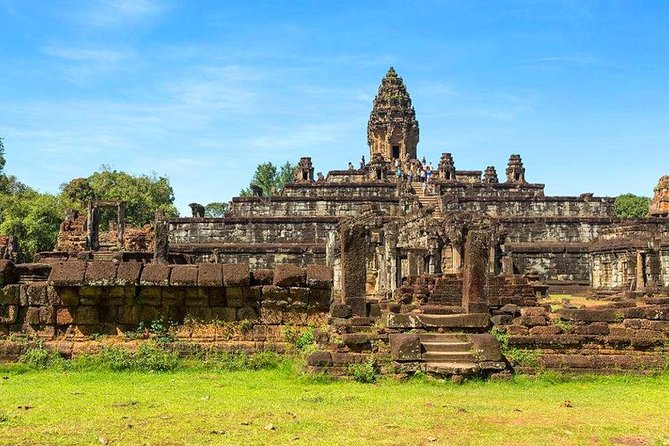
Next comes Baphuon, a three-tiered temple mountain built in the mid-11th century as a Hindu shrine dedicated to Shiva. Its location in Angkor Thom makes it an easy partner to Bayon, but the mood changes from Bayon’s crowded towers to a more open, monumental structure.
The one-hour stop gives you time to see its broad form and climb where permitted. Wear shoes with a good grip, since temple visits often involve uneven stone and stairs. The tour requires a normal level of mobility, and this is not a good match if walking is difficult.
Ta Prohm and the Royal Terraces
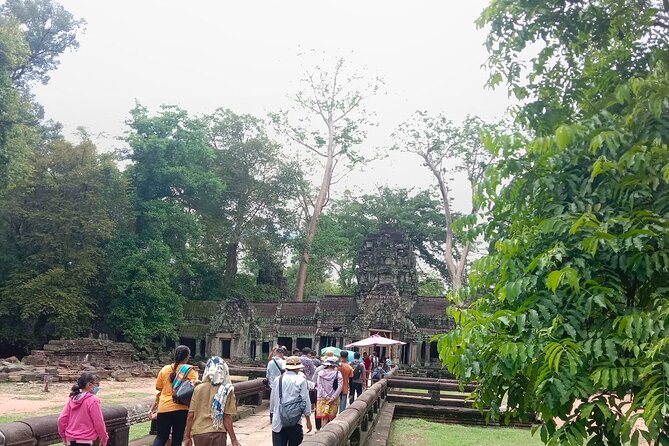
Ta Prohm is the temple most associated with trees growing through stone. Its original name was Rajavihara, and it was built in the late 12th and early 13th centuries in the Bayon style.
You have an hour to explore. Ta Prohm is atmospheric, but it is also one of the most sought-after stops on the route, so the compact timing helps keep the day moving. Listen closely to your guide here, since the temple’s layout can feel confusing when you are focused on doorways, roots, and carved walls.
The Terrace of the Elephants follows, with a half-hour stop. This terrace and the nearby Terrace of the Leper King formed the eastern boundary of the royal palace grounds and faced the parade area. It is less about entering a temple and more about understanding how Angkor’s royal center was arranged.
Other Siem Reap experiences to weigh up
- From Siem Reap: Angkor Wat and Floating Village 3-Day Trip
5.0 · 100 reviews - 3-Day Angkor Wat with All Interesting Major Temples, Banteay Srei & Beng Mealea
5.0 · 70 reviews - 3-Day Angkor Wat & All Interesting Major Temples & Kulen Mount Waterfall
5.0 · 63 reviews - 3 Days Siem Reap Explorer – Small Group
5.0 · 50 reviews
Angkor Wat after lunch
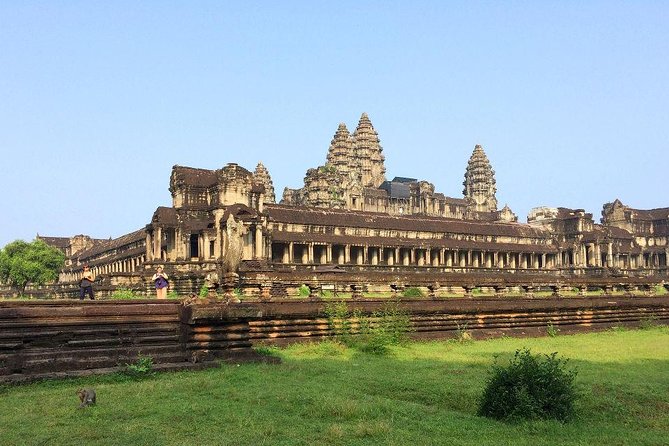
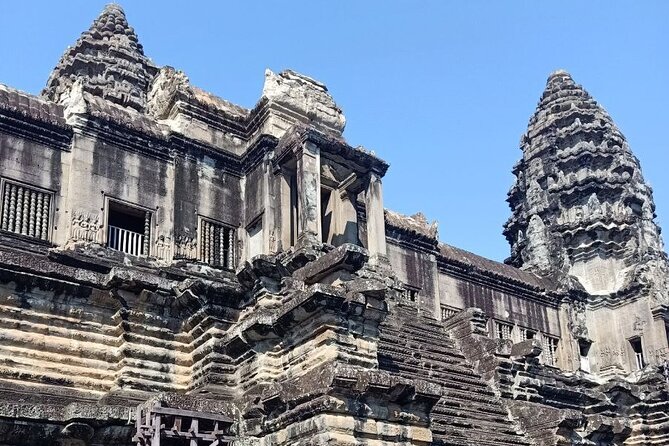
After lunch, you spend about three hours at Angkor Wat. This is the main event for many people, and the longer visit gives you time to appreciate its scale rather than simply taking a quick look at the famous front view.
Angkor Wat was first built as a Hindu temple and is the largest religious monument in the world, covering a site of about 162.6 hectares. Its galleries, towers, courtyards, and long approach make it easy to underestimate how much walking is involved.
I like the timing of placing Angkor Wat after the other temples on Day 1. By then, you have some context for Khmer temple design, and the grand scale makes more sense. The tradeoff is that three hours after a full morning can feel tiring, especially in hot weather.
Phnom Bakheng and the long first day
The final stop is Phnom Bakheng, a temple mountain dedicated to Shiva and built during the reign of King Yasovarman, from 889 to 910. It sits on a hill, giving it a different setting from the flat temple complexes.
The plan allows three hours here, which makes this the longest listed stop of the day. Phnom Bakheng is known as a popular place for watching the sun go down, but the tour details do not promise a particular sunset arrangement or guaranteed access. Treat it as a hilltop temple visit and confirm the exact timing with your guide.
Day 1 is packed. You see the temples most people hope to see, but you should expect a full day of heat, walking, stairs, and repeated transitions in and out of the vehicle.
Day 2: Sunrise, remote temples, and fine stone carving
Day 2 begins early with a return to Angkor Wat for sunrise. The listed visit lasts three hours, after which you return to your hotel for breakfast.
This repeat visit is a smart part of the plan. Angkor Wat looks different in the softer early light, and returning gives you a chance to see areas that you may have rushed through the previous afternoon. The drawback is obvious: you lose some sleep, and the exact quality of sunrise depends on weather and conditions.
After breakfast, you head to a cluster of temples that includes Preah Khan, Neak Pean, Ta Som, and East Mebon. The supplied schedule gives two hours for this group, so your guide will need to keep the route moving.
Preah Khan was a major temple complex and is one of the more rewarding stops for seeing corridors, carved details, and a less concentrated flow of sightseers than at Angkor Wat. Neak Pean is especially different because of its water-centered design, while Ta Som is a smaller temple with a quieter feel.
East Mebon, built on what was once an island in the East Baray reservoir, adds another example of earlier Khmer temple planning. These four stops are valuable together because you can compare scale, purpose, and design without spending the whole day on just one monument.
Banteay Srei and Banteay Samre
After lunch, you travel to Banteay Srei, about 25 kilometers northeast of the main Angkor area. This 10th-century temple is dedicated to Shiva and is often called the ladies temple.
Banteay Srei is smaller than Angkor Wat, but its carved pink sandstone details are a major reason it earns a place on this route. Two hours gives you time to look closely at the decoration rather than judging the temple only by its size.
The distance is part of the appeal and part of the cost in time. You spend more time in the vehicle than you would on the central Angkor circuit, but the change of setting helps prevent the second day from feeling like a repeat of Day 1.
Banteay Samre comes next, with about an hour. Built in the early 12th century during the reigns of Suryavarman II and Yasovarman II, it follows the Angkor Wat style and is dedicated to Hindu worship.
I like this stop because it gives you another large temple without the same headline status as Angkor Wat. It is a useful comparison point: after seeing Banteay Srei’s fine small-scale carving, you can look at Banteay Samre’s stronger, more monumental structure.
Banteay Kdei closes the temple circuit
The final temple is Banteay Kdei, meaning a citadel of chambers. It is a Buddhist temple built in the mid-12th to early 13th century during the reign of Jayavarman VII.
The one-hour visit gives Day 2 a final look at a different kind of temple plan. Banteay Kdei is located southeast of Ta Prohm and east of Angkor Thom, so it fits naturally into the wider circuit.
This is another demanding day. The sunrise start, the return for breakfast, the distant drive to Banteay Srei, and several temple walks add up. I would choose this tour only if you are comfortable with active sightseeing rather than a relaxed holiday schedule.
Day 3: Kampong Phluk on Tonle Sap
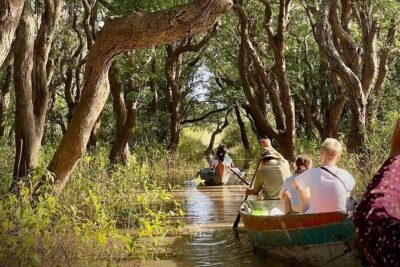
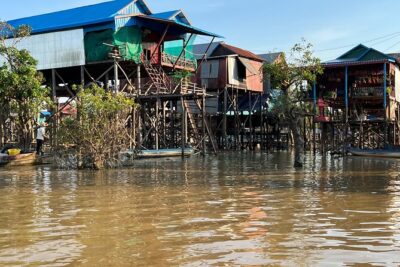
Day 3 shifts away from temple stones and toward life on the water. Kampong Phluk is a collection of villages largely built on stilts along Tonle Sap, and the name means Harbor of the Tusks.
The community depends heavily on fishing. During the wet season from May through October, water levels change the appearance and function of the village, so the view can vary depending on when you visit.
The three-hour stop includes a motorized boat ride, with the boat fee covered. This is an important inclusion because it lets you see the village from the water rather than treating it as a quick roadside stop.
The Tonle Sap visit gives the three-day plan balance. After two days of royal temples and religious monuments, you get a look at a community shaped by fishing, seasonal water, and stilted homes. Still, keep your expectations practical. This is a guided visit to Kampong Phluk, not a long independent exploration of every part of the lake.
Roluos brings the story back to the early Khmer period
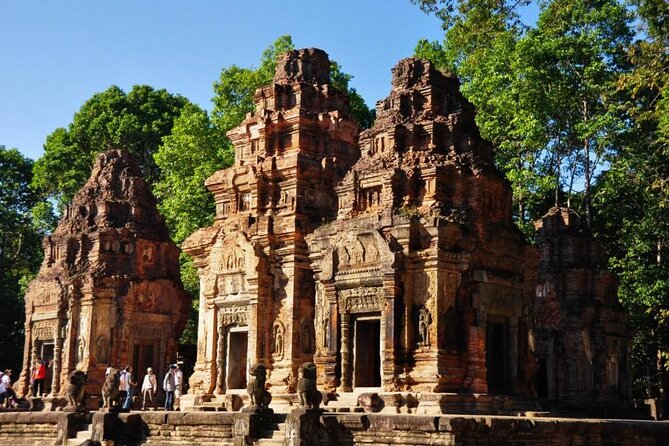
After Tonle Sap, the tour visits the Roluos Group for about three hours. These temples include some of the earliest permanent Khmer structures and date from the late ninth century, marking the beginning of the classical period of Khmer civilization.
Roluos is valuable because it shows an earlier stage of Khmer architecture. Angkor Wat can make Khmer temple design look fully formed, but the Roluos monuments help you see how the tradition developed.
This stop is also a good reason to choose the three-day plan instead of a shorter central Angkor circuit. You get a broader time span, from early Khmer structures through the grand temples of the 12th and 13th centuries.
Markets and craft stops before returning to Siem Reap
The last part of the day includes looks at Phsar Leu, also called the top market, Phsar Chas, or the old market, and Artisans d’Angkor. About two hours are set aside for this portion.
The market stops give you a change from formal monuments. You can browse everyday goods and local shopping areas, while Artisans d’Angkor adds a crafts-focused stop. The exact shopping experience will depend on how long you choose to spend at each place and how the day has run.
I appreciate having this light final section after the long temple and boat visits. You can finish with a sense of present-day Siem Reap rather than spending all three days looking backward.
What the $250 price really covers
At $250, the tour bundles several costs that are easy to overlook when planning independently:
- Hotel pickup and drop-off
- Air-conditioned transport
- A professional English-speaking guide
- The motorized boat fee
- Bottled water
- Cold towels
The temple pass is extra, at $62 for three days or $72 for seven days. Meals, soft drinks, and alcohol are also extra.
For a private group, the price can be reasonable if you value a fixed route, a guide, and door-to-door transport. It is less attractive if you prefer to choose your own temple times, linger for hours at one site, or cut stops when the heat becomes tiring.
The strongest practical advantage is the organization. The tour combines central Angkor, distant temples, Tonle Sap, and markets in three days. A self-arranged version can cost less in some cases, but you would need to coordinate vehicles, boat transport, ticketing, temple order, and early departures yourself.
Pace, comfort, and who should book
Most people can take part, but the tour is not suited to anyone who cannot walk normally or has less than average fitness. You will encounter temple paths, uneven surfaces, stairs, heat, and long periods on your feet.
Children under three are not accepted. The tour is near public transportation, but that matters less here because complimentary hotel pickup and drop-off are included.
I would book this if you want maximum coverage in limited time, prefer a private vehicle, and like having an English-speaking guide explain what you are seeing. It is especially useful for a first visit when you want both Angkor’s major monuments and a Tonle Sap village.
I would look for a slower option if you want long, unhurried temple visits or a flexible schedule. The route is ambitious, and the combination of sunrise, long drives, and repeated temple stops can wear you down.
The strongest praise attached to this experience centers on organization, punctuality, precision, and the impact of Angkor Wat itself. Those qualities fit the design of the tour: it is built to keep a complicated three-day route running in an orderly way.
Should you book the Temples & Tonle Sap tour?
Book it if you have three days in Siem Reap and want the major temples, lesser-known sites, Tonle Sap, and markets handled in one private plan. The combination is more varied than a temple-only package, and the Roluos Group and Kampong Phluk add useful context.
Before booking, confirm how the $250 price is applied to your group, then budget separately for the Angkor pass and meals. If you accept the early start and active pace, this is a strong all-round introduction to Siem Reap.
FAQ
Is hotel pickup included?
Yes. Complimentary hotel pickup and drop-off are included, and the vehicle departs your hotel at the tour start time.
What time does the tour start?
The stated start time is 8:30 a.m. The second day includes an early return to Angkor Wat for sunrise.
Is the Angkor temple pass included?
No. You must buy the pass separately at the Angkor Enterprise ticket office. The stated prices are $62 for a three-day pass and $72 for a seven-day pass.
Is the boat ride on Tonle Sap included?
Yes. The fee for the motorized boat at Kampong Phluk is included.
Are meals included?
No. Meals, soft drinks, and alcohol are not included in the tour price.
Is this a private tour?
Yes. Only your group participates in the activity.
Can young children join the tour?
Children under three years old cannot join. Most other participants can take part, but the tour requires normal walking ability and an average level of fitness.
Fresh reviews from around Siem Reap
- Full-Day Tour Preah Vihea & Koh Ker Temple 3.7 · 3 reviews
- Savor the Countryside: Tours with Authentic Cooking Classes” 5.0 · 3 reviews
- Angkor Wat Sunrise TukTuk Tour 5.0 · 3 reviews
- Angkor Grand Circuit Tour & Banteay Srei 5.0 · 3 reviews
- Guided Private Tuk Tuk Tour Angkor Wat and Small Circle and Five Extras 5.0 · 3 reviews
- Siem Reap Temple Tour 2-Day with Sunrise/Sunset 3.7 · 3 reviews
- Bangkok to Angkor Wat 2 Days 1 Night by Flight 4.5 · 3 reviews
- Kompong Pluk Tour 5.0 · 3 reviews
Tonle Sap Lake Tours, compared.
Sunset tour of Kampong Phluk stilts home village on the Tonle Sap
Read our review →
Kulen Mountain with Beng Mealea and Tonle Sap Small Group Tour
Read our review →
Half Day Kompong Pluck stilt home Village on Tonle Sap & Sunset
Read our review →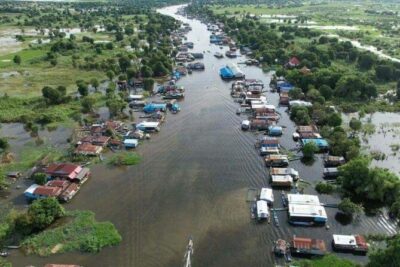
Kampong Khleang Floating Village and Tonle Sap Half Day Tour
Read our review →Browse the lists this tour appears in