
Reviewed · BENG MEALEA & KOH KER TOURS
2 Day Angkor Wat Kulen Mountain Beng Mealea Floating Village Tour
Angkor Wat at sunrise is only the opening act here. This two-day trip links Cambodia’s grandest temple, the tree-covered ruins of Ta Prohm and Beng Mealea, sacred Kulen Mountain, and life on Tonle Sap Lake. I like the wide range of places and the fact that entry tickets, meals, transport, water, and towels are built into the $88 price.
I also like the human touch: guides such as Mony and Chiep Chy are noted for explaining temple history clearly, helping with photos, and checking on guests in the heat. The trade-off is a punishing schedule, especially with a 4:30 AM pickup on day one and a full mountain, temple, and lake day on day two.
In This Review
- Key points at a glance
- What the $88 price really covers
- Day one begins before sunrise
- Angkor Wat, then breakfast at Srah Srang
- Preah Dak and the forest at Ta Prohm
- Angkor Thom and the faces of Bayon
- Day two reaches Kulen Mountain
- The 1000 Lingas and Kulen waterfall
- Beng Mealea gives you the wildest ruins
- Kampong Phluk and life on Tonle Sap
- How the schedule feels in real terms
- The guide can make or break the experience
- Who should book this two-day tour?
- Should you book it?
- FAQ
- What time does the tour begin?
- How long is the tour?
- What is included in the price?
- Are drinks included?
- How many people can join the group?
- Is vegetarian food available?
- Can I cancel for a full refund?
Key points at a glance
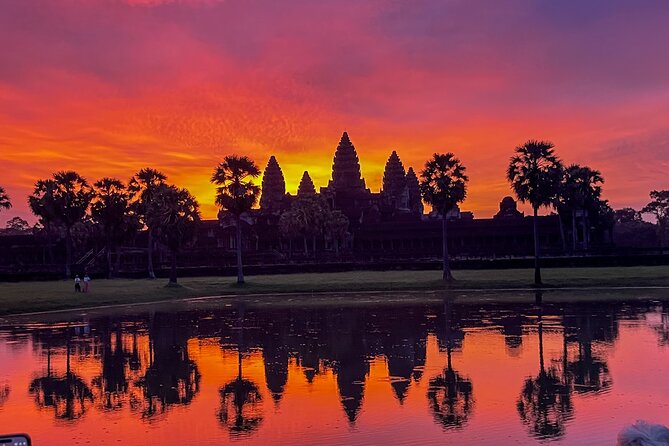
- Angkor Wat before breakfast: Watch dawn over the famous towers, then tour the temple before the day becomes hotter and busier.
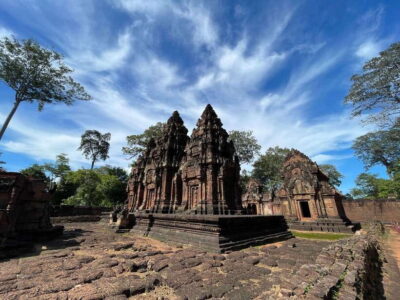
- Three very different temple moods: See the polished grandeur of Angkor Wat, the forest-wrapped Ta Prohm, and the broken, wild feel of Beng Mealea.
- Kulen Mountain adds nature and faith: Visit Poeng Ta Kho, an eight-meter reclining Buddha, the 1000 Lingas, and a waterfall where swimming is possible.
- Kampong Phluk brings village life into the plan: A boat ride on Tonle Sap offers a look at stilt houses, mangroves, and a Buddhist pagoda.
- A small group keeps it manageable: The vehicle holds no more than 14 people, with hotel pickup and drop-off in Siem Reap.
- Guides are a major part of the value: Mony and Chiep Chy are praised for temple explanations, patience, photography help, and care in the sun.
What the $88 price really covers
At $88 per person, this is a strong value if you want to see several major sites without arranging separate cars, tickets, meals, and guides. The price includes breakfast, lunch, an English-speaking guide, an experienced driver, hotel pickup and drop-off on both days, water, cool towels, vegetarian food if requested, and admission tickets for the two-day tour.
That bundle matters in Siem Reap. Angkor sites, Kulen Mountain, Beng Mealea, and Kampong Phluk are spread across different areas, so arranging each visit alone can become a string of transport decisions. Here, the basic framework is handled for you.
The price does not include soft drinks. That is a small extra, but you should still carry some Cambodian riel or another way to pay for drinks and personal purchases. Water is supplied during the excursion, which is especially useful on the long walks and exposed temple courtyards.
The group limit of 14 is another plus. This is not a private tour, but it is small enough that you should be able to hear the guide and ask questions without shouting across a large bus. The exact guide and driver can vary. Names associated with the experience include Mony, Chiep Chy, Tra, and Tram.
More Beng Mealea and Koh Ker trips:
- Siem Reap: Kulen Mountain, Beng Mealea and Tonle Sap Tour
5.0 · 1,483 reviews - Kulen Mountain with Beng Mealea and Tonle Sap Small Group Tour
5.0 · 780 reviews - Koh Ker Temple Group & Beng Mealea Full-Day Join-in Tour
5.0 · 710 reviews
Day one begins before sunrise
The first pickup is scheduled between 4:30 and 5:00 AM, with guests asked to be ready in the hotel lobby at 4:30. This is the day’s biggest practical challenge. You will need to prepare clothes, camera gear, and anything else you need the night before.
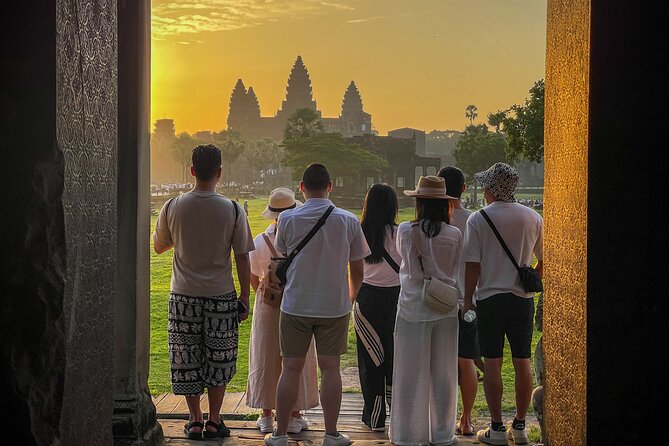
The early start is worthwhile because Angkor Wat’s towers are at their most dramatic when the sky begins to brighten behind them. Sunrise is also a good reason to visit the temple at this hour: you see the famous outline before the strongest heat arrives, then have time to explore with a guide.
Do not expect the sunrise itself to be the whole experience. Weather can change the color and clarity of the sky, and the viewing area can still be busy. The real value is that the tour uses the early morning well, combining the dawn view with a proper visit inside the temple.
Angkor Wat, then breakfast at Srah Srang
You have about two hours at Angkor Wat. That gives you time for the sunrise, photographs, and an introduction to the temple’s design and religious purpose.
A good guide can make a major difference here. Mony is praised for explaining the temples and helping with photographs, while Chiep Chy is described as speaking about Cambodia with real warmth. Those details matter at Angkor Wat, where a quick look at towers and galleries can leave you with attractive pictures but little sense of what you are seeing.
After the temple, the group stops for breakfast at a local family restaurant near Srah Srang. The meal is included, and this pause gives you a chance to sit down before the next temple walk. It also shifts the morning away from monuments and toward everyday life in the countryside.
The one-hour breakfast stop is useful, but keep your expectations practical. This is a local family restaurant, not a formal dining room. If you have dietary needs, the vegetarian option is available and should be requested when booking.
Preah Dak and the forest at Ta Prohm
Preah Dak is a short stop of about 20 minutes. You visit the rural village near the Angkor area and try traditional palm cake. It is brief, but it adds a local detail that a temple-only program would miss.
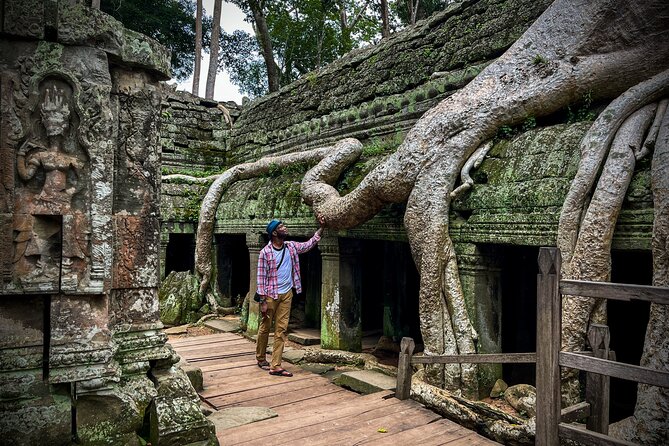
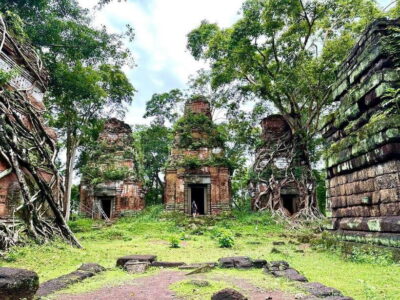
Then comes Ta Prohm, one of the most atmospheric stops of the first day. The temple was left partly overgrown, with tree trunks and large roots pressing over stone galleries. Its connection with the film Tomb Raider has made it famous, but the trees are more than a movie backdrop. They show how these monuments look when forest and stone share the same space.
You have about an hour at Ta Prohm. Wear shoes with a good grip and expect uneven ground. The site is photogenic, but you should give yourself time to look at carvings and building details instead of chasing only the best-known tree-root views.
More Phnom Kulen mountain days:
- Kulen Waterfall Join-in Tour (local Picnic lunch)
5.0 · 2,434 reviews - Kulen Mountain: Small-Group Tour and Picnic lunch
4.9 · 1,802 reviews - Phnom Kulen Waterfall & the Sacred 1000 Lingas (with Lunch)
4.8 · 974 reviews - Guided Small-Group Tour in Kulen Mountain Park Waterfall
5.0 · 480 reviews
Angkor Thom and the faces of Bayon
The two-hour visit to Angkor Thom includes the South Gate, Bayon, Baphuon, the Terrace of the Elephants, and the Terrace of the Leper King. This is a substantial part of the day, and it rewards a guide who can explain how the huge city complex fitted together.
Bayon is the star. Its towers carry the serene faces associated with Avalokitesvara, creating a strange feeling that you are being watched from every direction. The supplied description refers to 54 towers and 216 faces, though the exact count you see can depend on how the structure is counted and what has survived.
Baphuon gives you another kind of temple experience, with large stone forms and broad approaches. The terraces then shift your attention from religious buildings to royal ceremony and public display.
By the time you return to Siem Reap, the schedule places you back at your hotel around 1:00 PM. That half-day finish is welcome. You have the afternoon to rest, eat, or prepare for another early and active day.
Day two reaches Kulen Mountain
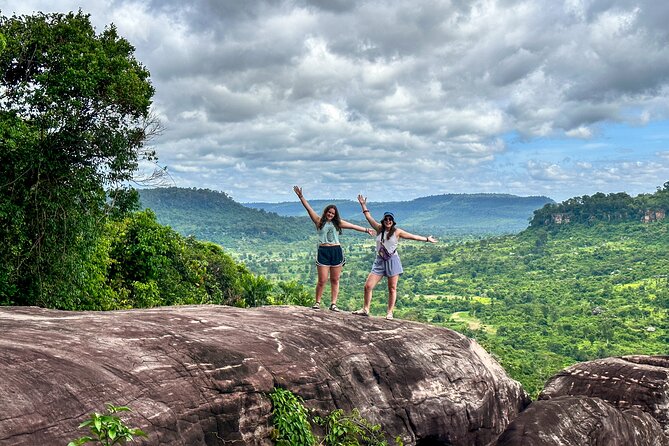
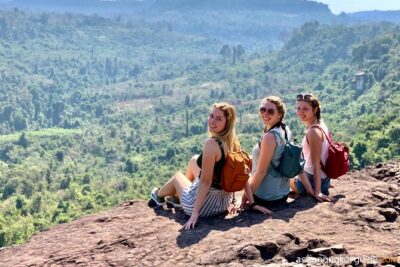
Day two starts with Poeng Ta Kho, a viewpoint reached by a short walk from the parking area. The view stretches over forests and canyons, so this is a good change of pace after day one’s enclosed temple courtyards.
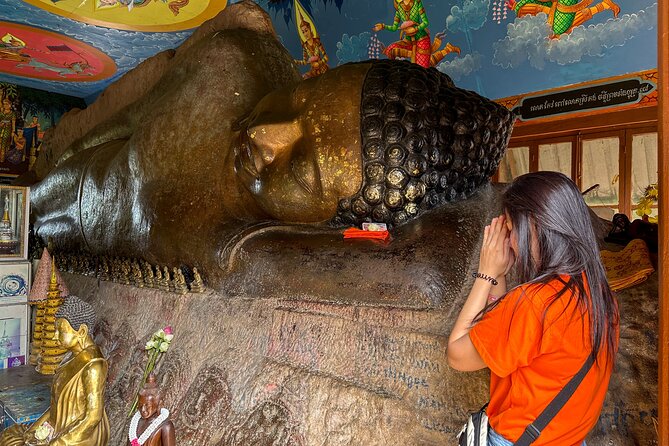
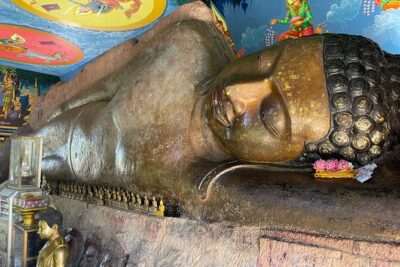
The next stop is Preah Ang Thom pagoda, home to an eight-meter reclining Buddha carved into the mountainside. The site remains a place of prayer, not simply an archaeological stop. You may see local families lighting incense and monks offering prayers, which gives the visit a living religious setting.
This stop requires a climb, so the pace may feel more demanding than the short description suggests. You should bring water, wear comfortable shoes, and be ready for heat. The guide’s role is useful here, since the Buddha and pagoda make more sense when you understand their place in local worship.
The 1000 Lingas and Kulen waterfall
At the riverbed known as the 1000 Lingas, 11th-century priests carved fertility symbols into the stone. Water once flowed over these carvings, giving it sacred meaning for the Angkor kingdom. It is a small stop, about 30 minutes, but the setting helps explain how religion, water, and royal power were connected.
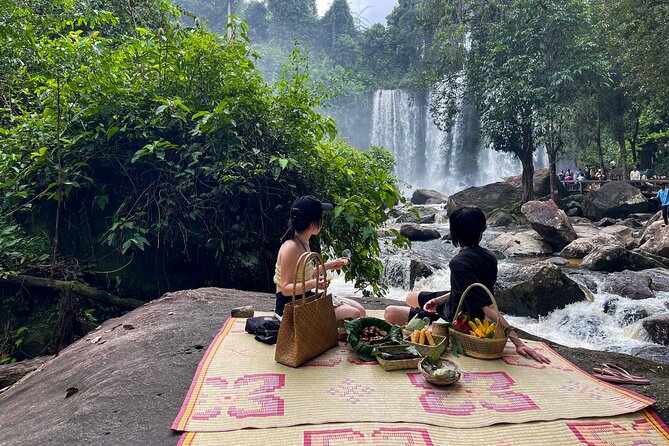
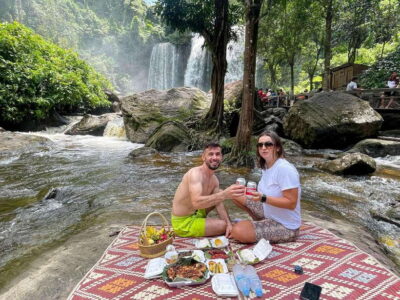
Then the tour moves to Phnom Kulen Waterfall for about an hour and a half. This is the most relaxed part of day two. You can sit near the falls, eat lunch on the rocks, listen to the water, and swim in the pools if conditions suit you.
The waterfall stop is also where the physical demands of the tour become more apparent. You may have climbed at the pagoda, walked across rough temple ground, and spent time in direct sun. A swim can be refreshing, but do not count on it as your only chance to cool down. Pack a swimsuit, a small towel if you prefer your own, and clothing that dries reasonably quickly.
Guides and drivers have received praise for practical care during hot days. Mony is noted for taking good photographs and being patient, while Tram is praised for providing cool towels and helping with hydration. Chiep Chy is described as checking in when the sun made one guest feel unwell. That kind of attention is worth more than polished commentary when you are tired.
Beng Mealea gives you the wildest ruins
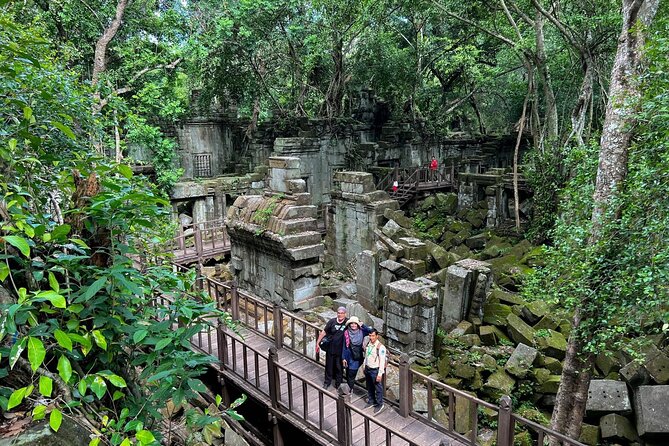
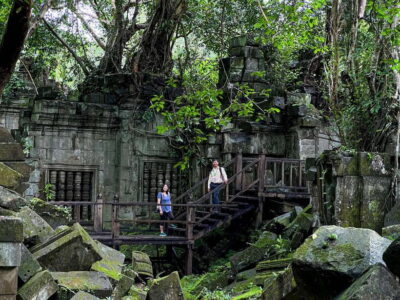
After lunch, you spend about an hour at Beng Mealea. This 12th-century temple lies farther from the central Angkor group and has a rougher, more broken appearance. Stone blocks, galleries, and vegetation create a sense of a monument still being reclaimed by the forest.
Beng Mealea is a good reason to choose this tour instead of a basic Angkor Wat day trip. Angkor Wat is grand and ordered. Ta Prohm is famous for its roots. Beng Mealea feels less controlled, with ruins that let you imagine what a temple site might look like after long neglect.
The drawback is the day’s distance and length. By this point, you have already seen a viewpoint, pagoda, river carvings, waterfall, and lunch stop. If you prefer slow archaeological visits, one hour may feel short. If you want variety and a strong set of photographs, the stop fits the plan well.
Kampong Phluk and life on Tonle Sap
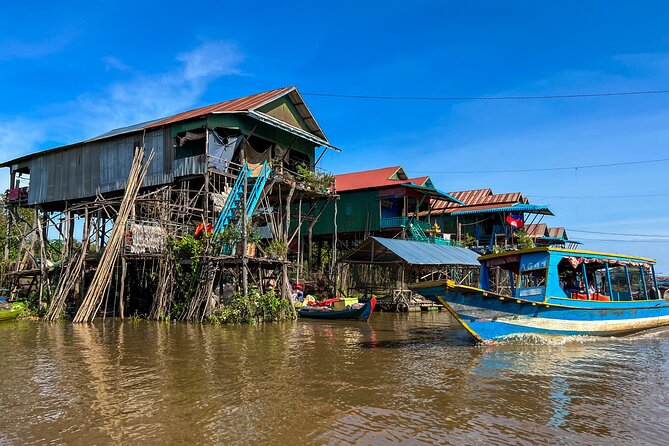
The final major stop is Kampong Phluk, a floating village on Tonle Sap Lake. The boat journey takes about an hour and a half, including time to see stilt houses, mangrove forest, and a Buddhist pagoda.
This part of the tour changes the subject completely. The temples show the power of past kingdoms. Kampong Phluk shows how families live with the lake today, using houses and boats suited to changing water levels. The village is not just a scenic add-on. It gives you a view of work, worship, and home life shaped by water.
The boat ride also brings a practical caveat: the experience depends on local conditions. The tour information does not promise a particular water level or a specific boat style beyond the scenic journey to the village. Treat the stop as a chance to observe respectfully rather than as a staged show.
After Kampong Phluk, you return to Siem Reap around 6:30 PM. You can be dropped at your hotel or at the Old Market for evening shopping and dinner. After such a long day, the hotel option will probably appeal to you. The Old Market option is handy if you still have energy and want to end the day in town.
How the schedule feels in real terms
This is an active two-day program, not a slow temple retreat. Day one runs from before dawn until early afternoon, while day two combines mountain walks, a waterfall, a distant temple, and a boat trip before the evening return.
The plan works because it alternates subjects. You move from sunrise to breakfast, village life, jungle ruins, royal architecture, mountain views, religious sites, swimming, and lake culture. That variety helps prevent the temples from blending into one long procession of sandstone.
Still, you should be realistic about your stamina. You will be walking on uneven surfaces, climbing at least at the mountain pagoda, and spending time outdoors. The supplied information says most people can participate, but it does not promise wheelchair access or a low-mobility route.
The best preparation is simple:
- Wear shoes suited to uneven temple paths.
- Carry sun protection and a refillable personal drink container.
- Bring swimwear for the Kulen waterfall.
- Keep your lobby pickup time clear at 4:30 AM.
- Ask for vegetarian food when booking if needed.
- Leave room for extra drinks, since soft drinks are not included.
The guide can make or break the experience
The strongest praise is directed at the guiding and driving team. Mony is repeatedly associated with clear temple explanations, patience, friendliness, and photography help. Chiep Chy is described as kind, passionate about Cambodia, and alert to the effects of heat. Drivers Tra and Tram are praised for smooth service, hydration, cool towels, and helpful drop-offs.
Your exact team may differ, so I would not book on the assumption that one named person is guaranteed. But the repeated pattern tells you what to value: a guide who can explain rather than recite, help you find good photo angles, and notice when the heat is taking a toll.
Photography support is a pleasant extra. It does not replace your own camera, but it can help if you are traveling alone or want a group picture. The more important benefit is context. Angkor’s scale can overwhelm you, and a clear explanation helps turn impressive stonework into something you can remember.
Who should book this two-day tour?
I would choose this tour if you have only a short stay in Siem Reap and want a broad introduction to the region. It suits first-time visitors who want the major Angkor highlights but also want a waterfall, a mountain shrine, a less restored temple, and a lake village.
It is also a good fit for couples, families with older children, and small groups who prefer a set plan. The vegetarian option, hotel pickup, included meals, and small group limit reduce the number of details you need to manage.
I would think twice if you dislike very early starts, long outdoor days, or changing from temples to nature and village visits. You may prefer separate day trips if you want to spend more time at each monument or choose your own pace.
The cancellation terms offer some useful flexibility: you can cancel for a full refund up to 24 hours before the local start time. Changes or cancellations inside that 24-hour window are not accepted for a refund.
Should you book it?
Book this tour if variety and value matter more to you than a leisurely pace. For $88, the combination of transport, guide, meals, admission tickets, hotel transfers, and two full days of major sights is persuasive.
The best parts are the early Angkor Wat visit, the contrast between Ta Prohm and Beng Mealea, the swimming stop at Kulen Waterfall, and the boat ride through Kampong Phluk. Just protect your energy, prepare for the 4:30 AM start, and treat day two as a full excursion rather than a casual outing.
FAQ
What time does the tour begin?
Pickup begins between 4:30 and 5:00 AM on day one. You should be ready in your hotel lobby at 4:30 AM.
How long is the tour?
The experience lasts approximately two days. Day one returns to Siem Reap at about 1:00 PM, and day two returns around 6:30 PM.
What is included in the price?
The price includes breakfast, lunch, an English-speaking guide, an experienced driver, hotel pickup and drop-off on both days, cool water, towels, vegetarian food if requested, and admission tickets for the two-day tour.
Are drinks included?
Water is provided during the excursion. Soft drinks are not included.
How many people can join the group?
The tour has a maximum group size of 14 people.
Is vegetarian food available?
Yes. A vegetarian food option is available.
Can I cancel for a full refund?
Yes. You can cancel up to 24 hours before the experience start time for a full refund. Cancellations or changes made less than 24 hours before the start time are not accepted for a refund.
More Angkor Temple Itineraries
- Angkor Wat Sunrise or Sunset Tour with Guide from Siem Reap
5.0 · 12,109 reviews - Siem Reap: Angkor Wat: Small-Group Sunrise or Sunset Tour
5.0 · 9,444 reviews - Siem Reap: Angkor Wat 2-Day Tour with Sunrise and Sunset
4.9 · 4,429 reviews - Siem Reap: Full-Day Angkor Wat Guided Tour with Sunset
4.9 · 3,803 reviews
More Floating Village Visits
- From Siem Reap: Kampong Phluk Floating Village Tour by Boat
4.9 · 6,979 reviews - Sunset tour of Kampong Phluk stilts home village on the Tonle Sap
5.0 · 4,865 reviews - Siem Reap: Kampong Phluk Floating Village Tour with Boat
4.9 · 3,843 reviews - Siem Reap Floating Village Kampong Phluk Sunset with Boat
5.0 · 1,962 reviews
Fresh reviews from around Siem Reap
- Full-Day Tour Preah Vihea & Koh Ker Temple 3.7 · 3 reviews
- Savor the Countryside: Tours with Authentic Cooking Classes” 5.0 · 3 reviews
- Angkor Wat Sunrise TukTuk Tour 5.0 · 3 reviews
- Angkor Grand Circuit Tour & Banteay Srei 5.0 · 3 reviews
- Guided Private Tuk Tuk Tour Angkor Wat and Small Circle and Five Extras 5.0 · 3 reviews
- Bangkok to Angkor Wat 2 Days 1 Night by Flight 4.5 · 3 reviews
- Siem Reap Temple Tour 2-Day with Sunrise/Sunset 3.7 · 3 reviews
- Kompong Pluk Tour 5.0 · 3 reviews
Beng Mealea & Koh Ker Tours, compared.
Kulen Mountain with Beng Mealea and Tonle Sap Small Group Tour
Read our review →
Browse the lists this tour appears in