

Reviewed · WAR HISTORY & MEMORIAL SITES
War Museum, Killing Field, and APOPO Hero RATs Tour
Cambodia’s difficult past and its hopeful present come together in this unusual Siem Reap tour. You move from rusting military equipment and a Khmer Rouge memorial to APOPO’s trained rats, which help detect landmines and protect lives. It is a serious day, but not a gloomy one from start to finish.
I like the private format, since your group can ask questions without keeping pace with strangers. I also like the sharp change in mood at APOPO, where the HeroRAT demonstration gives the day a practical, human side. The main thing to consider is that the War Museum and Wat Thmey can be emotionally heavy, and lunch is not included.
In This Review
- Key points to know before booking
- Why this Siem Reap tour feels different
- War Museum Cambodia: rusting evidence of a painful past
- Wat Thmey: a quiet memorial inside a working pagoda
- APOPO Visitor Center and the HeroRAT demonstration
- Satcha: seeing Cambodian craft as a living skill
- The Royal Residence: a short look at Siem Reap’s royal connection
- What the private vehicle and guide add
- Is $75 a fair price?
- Who should book this experience?
- Should you book it?
- FAQ
- How long does the tour last?
- Is hotel pickup included?
- Is the tour private?
- Is transportation provided?
- Is an English-speaking guide included?
- Which entrance fees are included?
- Is lunch included?
- Can I pet the HeroRATs?
- What is the cancellation policy?
- Is the tour suitable for most people?
Key points to know before booking

- Five hours with five meaningful stops: The schedule includes the War Museum, Wat Thmey, APOPO, Satcha, and the Royal Residence.
- Private transport and hotel pickup: An air-conditioned vehicle takes your group between sites.
- A strong guide can shape the day: Guides including Mr. Somra and Mr. Londgy have been praised for clear explanations and passion for Cambodia’s past.
- The HeroRAT visit is hands-on but optional: You can learn about the rats’ work, watch a demonstration, and choose whether to pet them.
- Entrance fees are covered: The price includes admission to the War Museum, Wat Thmey, and APOPO Visitor Center.
- Food is not part of the paid tour: The experience refers to Siem Reap’s street-food culture, but lunch is specifically excluded.
Why this Siem Reap tour feels different
Many history tours end at a memorial. This one keeps moving, from war and loss toward work that saves lives today. That structure gives the day a useful rhythm: first you learn what Cambodia endured, then you see one way people are still dealing with the consequences.
The tour costs $75 per person and lasts about five hours. That is not the cheapest way to spend a half-day in Siem Reap, but the price includes a private, air-conditioned vehicle, hotel pickup and drop-off, an English-speaking guide, and three entrance fees. For a private outing, the value is reasonable, especially if you want context rather than a quick look at several sites.
The published stop times add up to about four hours and 20 minutes. The remaining time is used for driving, hotel pickup, and transitions around Siem Reap. You should not expect a long street-food crawl or a full meal. The food reference describes the wider character of the city, while lunch is not included.
Related visits to Cambodian war museums and memorials:
- Bantey Srei, Kbal Spean and Landmine museum Private Tuk-Tuk
4.7 · 30 reviews - Siem Reap City Tour with War Museum and Killing Field
5.0 · 27 reviews - War Museum, Killing Field and Floating village ( Chong Kneas) Tour
5.0 · 14 reviews
War Museum Cambodia: rusting evidence of a painful past
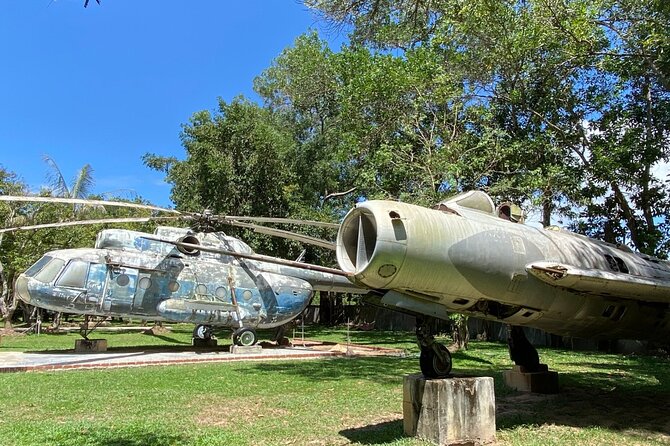
The War Museum is the longest stop, at about one hour and 30 minutes. It sits along National Road 6 between Siem Reap and the international airport, on grounds covering more than two hectares. The museum was founded in 2001 and was formerly known as the Siem Reap War Museum.
This is not a polished, modern museum built around sleek displays. Its appeal is more direct. You see military equipment and other reminders of Cambodia’s long period of conflict, including rusting pieces that make the past feel physical rather than distant. That rough quality can be part of the experience, though you should not expect the organization or climate control of a major national museum.
Give yourself time here. A hurried visit can turn the stop into a collection of old objects. A good guide helps explain why the equipment matters and how Cambodia’s recent past shaped ordinary life. Mr. Somra has been praised for clear historical explanations, while Mr. Londgy has been singled out for his passion and ability to make the subject memorable.
This is also the point where the tour asks most of you emotionally. The material is sobering. If you are traveling with children, use your judgment and let your guide set the tone. A 12-year-old has found the visit educational and absorbing, but the subject is still serious and may require a little conversation afterward.
Wat Thmey: a quiet memorial inside a working pagoda
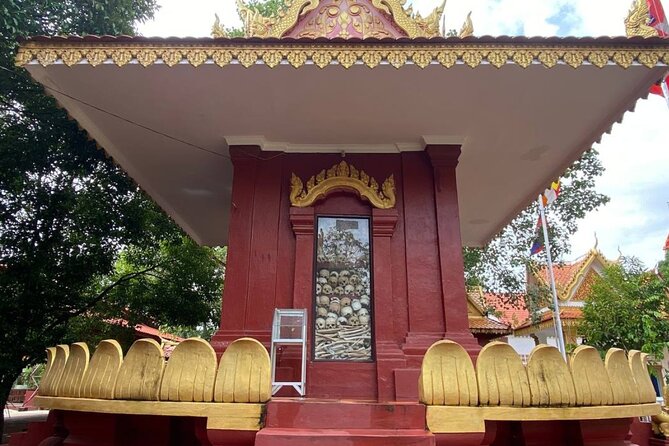
The next stop, Wat Thmey, takes about 40 minutes. It is a small but important memorial in the grounds of a functioning Buddhist pagoda, honoring victims of the Khmer Rouge period.
The setting matters. This is not an isolated museum built only for visitors. It is part of an active religious place, which makes the memorial feel connected to present-day community life. You have a short time here, so listen closely as your guide explains the site and its place in Cambodia’s painful past.
Wat Thmey is a reflective stop rather than a busy sightseeing attraction. You may find the contrast with the War Museum useful: the first site presents physical reminders of conflict, while this one focuses more directly on remembrance. The visit can be difficult, so respectful behavior and a quiet pace are appropriate.
Forty minutes is enough for the basic visit, but not for a long historical lecture. If you want more background, this is a good moment to ask your guide specific questions. The private format helps because you are not limited to a fixed group discussion.
APOPO Visitor Center and the HeroRAT demonstration
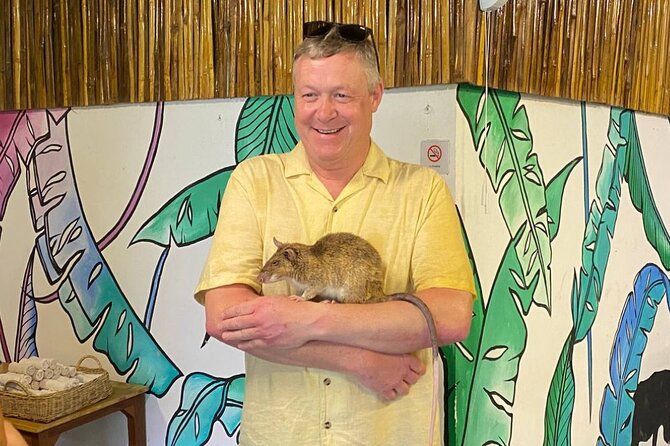
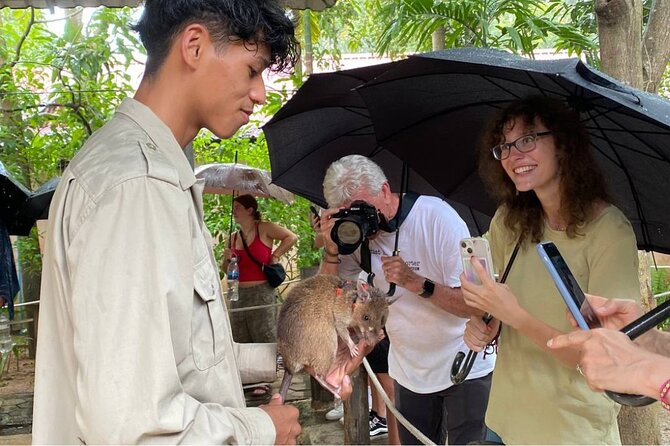
After two heavy historical stops, APOPO changes the tone of the day. You spend about one hour learning how African giant pouched rats, known as HeroRATs, are trained to detect landmines in Cambodia and save lives.
The idea is striking because these animals do work that requires a sensitive sense of smell, while their light weight means they can search without triggering many mines. The information provided for the visit supports the central point: these specially trained rats help find dangerous explosives and reduce the risk to people.
The demonstration is the heart of the stop. You see how the rats are involved in detection work, rather than simply reading about an aid project on a wall. Petting the rats is optional. If animals make you uneasy, you can still take part in the educational side without touching them.
I especially like this stop for families and for anyone who wants to understand how the past still affects Cambodia. The War Museum and Wat Thmey explain the damage caused by conflict. APOPO shows a practical effort to address one of its lasting dangers. That connection gives the full tour more purpose than a simple sequence of unrelated attractions.
The center also operates in Cambodia and six other countries, according to the information provided. You can learn about the organization’s wider work, but the Cambodia setting keeps the visit tied to the day’s historical theme.
More museums and galleries in Siem Reap:
- Private Tour: HERO Rats & Angkor National Museum
4.5 · 16 reviews - Kbal Spean Trekking Tour with Banteay Srei and Landmine Museum
5.0 · 14 reviews - Siem Reap: War Museum included Ticket and Pickup Drop Off
4.9 · 12 reviews - Bantreay Srei , Kbal Spean and Landmine Museum with Tuk Tuk
4.4 · 9 reviews
Satcha: seeing Cambodian craft as a living skill
Satcha, located at number 256 BBU Road, takes about 40 minutes. Launched in March 2023, it is described as Cambodia’s first handicraft incubation center. Its purpose is to train and support local artisans through intensive, multi-year programs.
This stop adds a different view of Cambodia. You are not only looking backward at war and memory. You are seeing an institution focused on skills, livelihoods, and the continuation of local craft traditions.
The visit is connected to artisan culture and handicraft shops, but the exact demonstrations or purchases available on your date are not specified. Think of Satcha as a brief introduction rather than a guaranteed workshop. If you are interested in Cambodian craft, ask your guide what is being shown during your visit and how the training programs work.
The 40-minute timing keeps the day moving, though shoppers may wish for more time. If buying handicrafts is important to you, this stop may feel short. If you want a compact look at contemporary artisan work after the memorial sites, it fits the day well.
The Royal Residence: a short look at Siem Reap’s royal connection

The final listed stop is the Royal Residence, visited for about 30 minutes. The royal villa was built in 1904 and serves as the official residence of Cambodia’s King when he visits Siem Reap.
The building also connects to the period of the French protectorate, giving you another layer of local history. After the war memorials and APOPO, this is a calmer architectural and civic stop. It helps place Siem Reap within Cambodia’s wider political story, rather than treating the city only as a gateway to Angkor.
Thirty minutes is a short visit, so you should expect an exterior-focused stop or a concise explanation of the site rather than a full palace tour. The description does not state that interior access is included. Ask your guide what is open on the day you go.
What the private vehicle and guide add
Hotel pickup and drop-off are included, along with an air-conditioned vehicle. In Siem Reap’s heat, that matters. You can move between sites without arranging separate tuk-tuks, negotiating fares, or figuring out the route after an emotionally demanding museum visit.
The activity is private, so only your group takes part. That gives you more control over questions and pacing, although the scheduled stop lengths still shape the day. It is a good fit if you want a focused outing with family or friends rather than a large coach group.
An English-speaking guide is included. The strongest personal praise has gone to Mr. Somra and Mr. Londgy, both noted for historical knowledge, clear explanations, and enthusiasm. A guide matters especially at the War Museum and Wat Thmey, where objects and memorials need context. At APOPO, the guide can also help connect the rats’ work to Cambodia’s landmine problem.
The tour is listed as suitable for most people and near public transportation, but hotel pickup makes transit access less important for most bookings. Confirmation is received at booking, and free cancellation is available up to 24 hours before the start time. Changes or cancellations made inside that window are not accepted for a refund.
Is $75 a fair price?

The answer depends on how you would otherwise visit these sites. If you only want to see the Royal Residence or a single memorial, booking this package may be more than you need. If you want all five stops, private transport, a guide, and admission fees, $75 is easier to justify.
The tour also saves you from arranging separate transport to sites spread around the city. The War Museum is on National Road 6, while the other stops require additional movement. The air-conditioned car is not a luxury detail in Cambodia. It makes the half-day easier, particularly in hot weather.
Lunch is the main extra expense to plan. The tour does not include it, and no specific meal is promised. You can ask your operator about timing, but do not book this expecting food tastings to be built into the price.
Who should book this experience?
I would choose this tour if you want a serious introduction to Cambodia’s recent past and prefer a guide to explain what you are seeing. It suits couples, families with older children, and small private groups who want a manageable half-day outside the usual temple circuit.
It is also a good choice if APOPO is a priority. The HeroRAT visit is unusual, educational, and more hopeful than a standard war museum stop. The optional petting means you can enjoy the visit even if you are not comfortable handling animals.
I would think twice if you want a relaxed food tour, a full day of temple exploration, or a long handicraft-shopping session. The street-food description may create expectations that the schedule does not meet, and the historical stops require attention rather than casual sightseeing.
Should you book it?
Book this tour if you want Siem Reap to mean more than Angkor’s temples. The combination of the War Museum, Wat Thmey, APOPO, Satcha, and the Royal Residence gives you a compact look at conflict, remembrance, practical aid, craft, and royal history.
The best reason to go is the balance between difficult history and useful hope. The main caution is emotional weight, plus the fact that lunch and a substantial food experience are not included. If that suits your interests, the private vehicle and strong guide support make this a worthwhile five-hour outing.
FAQ
How long does the tour last?
The tour lasts approximately five hours.
Is hotel pickup included?
Yes. Hotel pickup and drop-off are included.
Is the tour private?
Yes. This is a private activity, and only your group participates.
Is transportation provided?
Yes. An air-conditioned vehicle is included.
Is an English-speaking guide included?
Yes. The tour includes an English-speaking guide. Guides named in the available information include Mr. Somra and Mr. Londgy.
Which entrance fees are included?
Admission to the Siem Reap War Museum, Wat Thmey, and the APOPO Visitor Center is included.
Is lunch included?
No. Lunch is not included.
Can I pet the HeroRATs?
Petting the rats is optional. You can visit APOPO and learn about the animals’ work without choosing to touch them.
What is the cancellation policy?
You can cancel at least 24 hours before the experience starts for a full refund. Cancellations or changes made less than 24 hours before the start time are not accepted for a refund.
Is the tour suitable for most people?
The activity information says most people can participate. The tour is also near public transportation, although hotel pickup and drop-off are provided.
Fresh reviews from around Siem Reap
- Full-Day Tour Preah Vihea & Koh Ker Temple 3.7 · 3 reviews
- Savor the Countryside: Tours with Authentic Cooking Classes” 5.0 · 3 reviews
- Angkor Wat Sunrise TukTuk Tour 5.0 · 3 reviews
- Angkor Grand Circuit Tour & Banteay Srei 5.0 · 3 reviews
- Guided Private Tuk Tuk Tour Angkor Wat and Small Circle and Five Extras 5.0 · 3 reviews
- Siem Reap Temple Tour 2-Day with Sunrise/Sunset 3.7 · 3 reviews
- Bangkok to Angkor Wat 2 Days 1 Night by Flight 4.5 · 3 reviews
- Kompong Pluk Tour 5.0 · 3 reviews