
Reviewed · MONK BLESSINGS & BUDDHIST EXPERIENCES
Siem Reap: Traditional Spiritual Water Blessing in Monastery
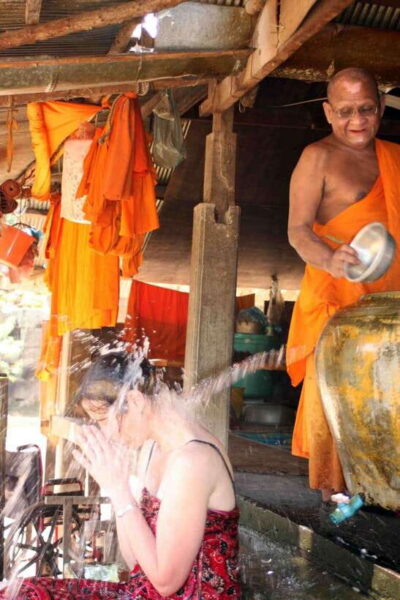
The most meaningful part of this Siem Reap experience is its quiet change of pace. You leave the town by tuk tuk and enter an ancient pagoda where monks chant, bless you with holy water, and tie a red bracelet around your wrist. I like the personal ceremony and the chance to meet Cambodia through living spiritual practice, not just stone temples.
I also like that the $45 price includes private transport, an English-speaking guide, the pagoda donation, and a sarong for the full cleansing ritual. The main consideration is practical: the longer blessing pours water over your head, so bring a towel and dry clothes. If you want to stay completely dry, choose the lighter sprinkling.
In This Review
- Key things to know before you go
- Leaving Siem Reap for a quieter Cambodia
- What happens at the monastery
- Understanding the chants and holy water
- The red bracelet you take home
- The short stop after the pagoda
- How the $45 price adds up
- Guide quality makes a real difference
- Clothing, comfort, and respectful behavior
- Who will appreciate this experience most
- Booking details worth knowing
- Should you book the monk blessing?
- FAQ
- How long does the water blessing experience last?
- Does the tour include pickup and drop-off?
- What are the two blessing options?
- Will I get wet during the ceremony?
- What should I wear and bring?
- Is the activity private and wheelchair accessible?
- Can I cancel or pay later?
Key things to know before you go
- The full ritual gets you properly wet: You change into a provided sarong before monks pour holy water over your head.
- The light blessing is gentler: Monks sprinkle holy water while chanting for good luck, safe travel, and long life.
- Sopheak and John are named guide options: Sopheak is noted for excellent English and broad knowledge, while John is described as especially thoughtful during the ceremony.
- The red bracelet has a purpose: It represents the blessing and may be worn until it falls away naturally.
- The trip lasts 2.5 hours: Allow about 20 minutes by tuk tuk each way, plus roughly 1.5 hours at the monastery and a short additional stop.
- Dress for a working religious site: Cover your shoulders and knees, and leave short skirts and sleeveless shirts at the hotel.
Leaving Siem Reap for a quieter Cambodia
Siem Reap is usually tied to Angkor Wat, temple circuits, and packed sightseeing schedules. This outing gives you a different kind of morning or afternoon. Instead of chasing another monument, you ride into the Cambodian countryside and spend time at a monastery where the focus is prayer, water, and personal reflection.
Your hotel pickup is in Krong Siem Reap, and transport is by tuk tuk. The ride takes about 20 minutes each way. That is long enough to notice the change from town streets to a more peaceful setting, but short enough that the journey does not take over the day.
I see the tuk tuk as part of the value here. You do not need to arrange a separate ride or work out where the pagoda is located. You can simply sit back, watch the town thin out, and let the guide explain what will happen once you arrive.
This is a private group experience, so you are not placed into a large crowd for a personal religious moment. That matters. A blessing is easier to approach with respect when you have time to listen and ask questions without a tour bus waiting nearby.
More monk blessings and Buddhist experiences:
- Siem Reap: 1-Hour Cambodian Buddhist Water Blessing
4.9 · 68 reviews - Monk Blessing Ceremony in Siem Reap
5.0 · 24 reviews - Private Guided Angkor Wat Tour by Lady Tuk Tuk with Monk Blessing
5.0 · 19 reviews
What happens at the monastery
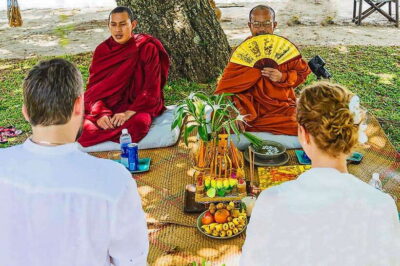
On arrival, your English-speaking guide leads you through the pagoda and explains the purpose of the ceremony. The guide provides cultural context before you meet the monks, which helps you understand the ritual rather than treating it as a quick photo opportunity.
The setting is described as an ancient pagoda in a calm part of the countryside. The exact pagoda name is not provided, so you should not book this expecting a particular famous temple or a major Angkor monument. The appeal is the setting and the ceremony itself.
You are offered two forms of blessing. Both involve monk chants and holy water, but they suit different comfort levels.
The first is the light sprinkling. You sit or stand while the monks chant in unison and sprinkle blessed water over you. The water represents spiritual cleansing and the washing away of bad luck or negative influences. The ceremony is gentle, short-feeling, and easier to fit into a busy sightseeing day.
The second is the full cleansing ritual. Monks continue their rhythmic chants while pouring vessels of holy water over your head. This is the more physical and theatrical choice, but its meaning is also more complete within the terms of the ceremony: cleansing the body, mind, and spirit.
You receive a sarong so your regular clothes can remain dry during the full ritual. Even so, bring a change of clothes and a towel. The provided sarong is a useful inclusion, but it does not remove the need to prepare for water on your hair and skin.
I would choose the light sprinkling if you want a calm cultural introduction, especially if you have onward plans afterward. Choose the full ritual if you are comfortable getting wet and want the ceremony to feel like a clear personal reset.
Understanding the chants and holy water
The ceremony is built around Buddhist prayer and blessing. The monks chant for good fortune, safe travels, long life, health, and peace. The water is not presented as a simple bath or spa treatment. It carries symbolic meaning, and your guide’s explanation helps make that clear.
You do not need to share the same beliefs to take part respectfully. An open mind is more important than any particular religious background. I would approach the ritual as a chance to witness a Cambodian custom and accept the good wishes being offered.
Your manner matters. Keep your voice low, follow your guide’s instructions, and treat the monks and the pagoda with care. This is not the place for casual joking, loud conversation, or hurried photography.
The ceremony may feel unfamiliar, and that is part of its value. Much of Cambodia’s culture is encountered through temples, statues, and museum displays. Here, you see a tradition still practiced for personal reasons. That gives the visit a more direct human quality.
The red bracelet you take home
At the end of the blessing, the monks tie a red bracelet around your wrist. The string represents the blessing you have received and is believed to bring protection and good luck.
You can wear it until it falls off naturally. That small detail gives the ceremony a lasting reminder. You return to Siem Reap with something simple on your wrist, and it can bring the experience back to mind long after the water has dried.
The bracelet is not a souvenir in the usual shop-bought sense. You do not choose it from a shelf or haggle over its price. It is part of the ceremony, and its meaning comes from how it was placed and why it was given.
If you are taking photographs, ask your guide when it is appropriate. The blessing should remain the main event, not a backdrop for a staged picture.
A different pace for your next Siem Reap morning:
- Angkor Wat Sunrise or Sunset Tour with Guide from Siem Reap
5.0 · 12,109 reviews - Siem Reap: Angkor Wat: Small-Group Sunrise or Sunset Tour
5.0 · 9,444 reviews - From Siem Reap: Kampong Phluk Floating Village Tour by Boat
4.9 · 6,979 reviews - Sunset tour of Kampong Phluk stilts home village on the Tonle Sap
5.0 · 4,865 reviews
The short stop after the pagoda
The schedule includes about 20 minutes at an additional local point of interest before the tuk tuk returns you to Siem Reap. It is described as a hidden local stop, but no exact name or detailed description is provided.
That means you should keep your expectations open. It may add a little variety after the monastery visit, but it is not the reason to book this activity. The pagoda ceremony is the heart of the outing, while this shorter stop gives the trip a little more local texture.
A local market stop is also included among the tour arrangements. Since the information does not specify which market or what activities take place there, think of it as a brief chance to see everyday surroundings rather than a major shopping excursion.
The short timing is useful. You are not committing to a full-day cultural program, and you still have most of the day available for Angkor sites, meals, or rest.
How the $45 price adds up
At $45 per person, this is not the cheapest way to spend a few hours in Siem Reap. You could visit a pagoda independently for less, especially if you already have transport and know how to approach the ceremony.
The value comes from what is bundled into the price. You receive:
- Hotel pickup and drop-off by tuk tuk
- A live English-speaking guide
- A private group setting
- The donation to the pagoda
- A sarong for the full water ritual
- The monastery visit and guided explanation
- An additional short local stop
The donation is worth noting. You are not simply entering a religious site as a paying spectator. Part of your fee goes toward the pagoda, while the guide helps you understand the ceremony and behave appropriately.
The private format also improves the value for couples, families, and small groups who want a quieter experience. For a solo participant, $45 is a larger personal spend, but it includes private transport and a focused cultural activity rather than a large shared excursion.
I would compare this price with what you want from the morning or afternoon. If you want another standard temple tour, this may feel too narrow. If you want a personal ritual, local contact, and a break from the usual sightseeing route, the price is reasonable.
Guide quality makes a real difference
A good guide is especially important here because the ceremony has meaning that may not be obvious from watching alone. You want someone who can explain the purpose of the water, the chants, the bracelet, and the correct behavior without turning the experience into a lecture.
Sopheak is specifically noted for excellent English and a strong command of the subject. That is useful when you have questions about what the monks are doing or why you are offered two forms of blessing.
John is described as a particularly caring companion during the experience. That matters if you are approaching the ceremony during a period when you want calm or personal reflection. His role is not only to move you from the hotel to the pagoda, but to help you understand the process and feel at ease.
The guide names may depend on the date and availability, so you should not assume one particular person will lead your visit. Still, the experience clearly depends on thoughtful interpretation. Ask questions before the ritual begins, when there is time to discuss what you are about to receive.
Clothing, comfort, and respectful behavior
Dress as you would for a religious site. Your shoulders and knees should be covered, so choose longer trousers, a long skirt, or another modest outfit. Short skirts and sleeveless shirts are not allowed.
Bring a towel and a complete change of clothes, particularly if you plan to take the full cleansing ritual. You may also want to protect your phone and other items from splashing, although no special storage arrangement is stated.
The light sprinkling is the safer choice if you are concerned about wet clothing, hair, or comfort. The full ritual is more involved, but it asks you to accept water poured directly over your head.
Keep your attitude quiet and respectful. You are visiting a functioning religious site, not attending a staged performance. Listen to the guide, follow the monks’ instructions, and let the ceremony unfold at its own pace.
The activity is listed as wheelchair accessible. If you require specific support, it is sensible to confirm the details when booking, since the available information does not describe the pagoda’s exact paths or surfaces.
Who will appreciate this experience most
I would recommend this outing to you if you want a personal cultural activity that fits beside an Angkor itinerary. It suits people who value ritual, reflection, and conversation more than a long list of attractions.
It is also a good choice if you have already seen several major temples and want to understand another part of Cambodian life. The ceremony gives you a reason to slow down and pay attention to the people and customs around the temple.
Couples and small private groups will likely appreciate the quiet format. Families can also consider it, provided everyone can dress modestly and behave calmly during the blessing.
This may not suit you if you want constant sightseeing, extensive historical detail, or a packed schedule of famous monuments. The additional stop is brief, and the experience centers on one ceremony. It is deliberately focused.
You should also think about your attitude toward spiritual activities. You do not need to be religious, but you should be willing to participate with courtesy. If you only want a quick photo with monks, this is not the right fit.
Booking details worth knowing
The total duration is 2.5 hours, including pickup, the monastery visit, the shorter stop, and the return to Krong Siem Reap. Starting times depend on availability.
You can cancel up to 24 hours before the activity for a full refund. The reserve-now-and-pay-later option also helps if you are still arranging your Siem Reap schedule.
The tour is conducted in English. Pickup and drop-off at your Siem Reap hotel are included, and the activity is operated as a private group.
Personal expenses are not included, so carry money if you want to buy anything during the local market stop. The pagoda donation is included, which saves you from needing to work out a suitable contribution at the temple.
Should you book the monk blessing?
Book this experience if you want a quiet, meaningful pause from the standard Siem Reap route. The combination of tuk tuk transport, guide explanation, monk chants, holy water, and a red bracelet creates a clear beginning-to-end ritual rather than a quick temple visit.
I would choose the light sprinkling if you want the cultural meaning without changing clothes. I would choose the full cleansing if the idea of a complete water blessing appeals to you and you have a towel and dry outfit ready.
At $45, you are paying for guidance, private transport, the pagoda contribution, and access to a personal ceremony. The best reason to book is not the number of stops. It is the chance to spend a few unhurried hours with a living Cambodian tradition.
FAQ
How long does the water blessing experience last?
The full activity lasts 2.5 hours, including tuk tuk transport from Siem Reap, the monastery visit, a short additional stop, and the return to town.
Does the tour include pickup and drop-off?
Yes. Pickup and drop-off at your hotel in Krong Siem Reap are included by tuk tuk.
What are the two blessing options?
You can choose a light sprinkling of blessed water while the monks chant, or a full cleansing ritual in which monks pour vessels of holy water over your head.
Will I get wet during the ceremony?
You will get wet if you choose the full cleansing ritual. A sarong is provided so your regular clothing can remain dry. The light sprinkling is the gentler option.
What should I wear and bring?
Wear clothing that covers your shoulders and knees. Short skirts and sleeveless shirts are not allowed. Bring a towel and a change of clothes.
Is the activity private and wheelchair accessible?
The experience is offered as a private group and is listed as wheelchair accessible.
Can I cancel or pay later?
You can cancel up to 24 hours before the activity for a full refund. A reserve-now-and-pay-later option is available.
Fresh reviews from around Siem Reap
- Full-Day Tour Preah Vihea & Koh Ker Temple 3.7 · 3 reviews
- Savor the Countryside: Tours with Authentic Cooking Classes” 5.0 · 3 reviews
- Angkor Wat Sunrise TukTuk Tour 5.0 · 3 reviews
- Angkor Grand Circuit Tour & Banteay Srei 5.0 · 3 reviews
- Guided Private Tuk Tuk Tour Angkor Wat and Small Circle and Five Extras 5.0 · 3 reviews
- Siem Reap Temple Tour 2-Day with Sunrise/Sunset 3.7 · 3 reviews
- Bangkok to Angkor Wat 2 Days 1 Night by Flight 4.5 · 3 reviews
- Kompong Pluk Tour 5.0 · 3 reviews
Monk Blessings & Buddhist Experiences, compared.
Private Guided Angkor Wat Tour by Lady Tuk Tuk with Monk Blessing
Read our review →
Siem Reap Cambodian Buddhist Water Blessing and Local Market
Read our review →Siem Reap Cambodian Buddhist Water Blessing and Local Market
Read our review →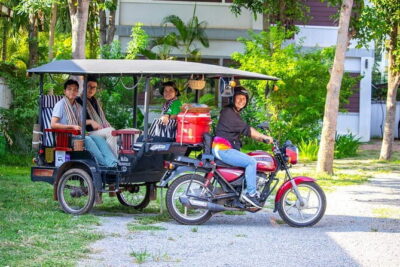
Traditional Khmer Water Blessing by Monk and Lotus Farm Visit
Read our review →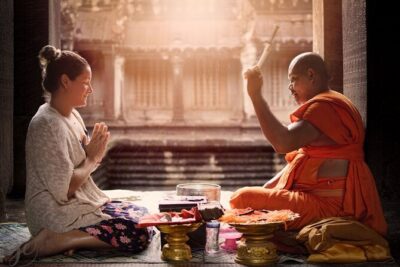
Browse the lists this tour appears in