Reviewed · TUK-TUKS
Siem Reap Street Foods Tour by Tuk Tuk with Personal Guide
Siem Reap’s best food stories often begin at a roadside grill, not a polished restaurant. This private evening tour takes you by tuk-tuk to local food stalls and markets, where you can try up to 10 Cambodian specialties, from rice and pork to grilled meats, spring rolls, desserts, and even insects.
I like the private format, since your guide can adjust the food to suit your group. I also like the human side of the tour: guides such as Leap and Sara explain ingredients, customs, and preparation while vendors cook nearby. The main drawback is that some foods, especially baby duck eggs and insects, may test your nerve more than your appetite.
In This Review
- Key points to know before booking
- A Cambodian food night by tuk-tuk
- Stop one: rice, pork, and the Cambodian breakfast table
- Wat Kong Moch: seafood, drinks, and brave choices
- Phsar Leu Thom Thmey, Siem Reap’s largest local market
- The night market and Cambodia’s snack culture
- Psar Deum Kralanh Market and everyday shopping
- Kork Thlok Market, the broadest look at local life
- What you may eat during the evening
- Why the private format adds value
- Timing, pickup, and practical comfort
- Who will enjoy this food tour most
- Should you book the Siem Reap street food tour?
- FAQ
- How long does the Siem Reap street food tour last?
- What is included in the price?
- Is the tour private?
- Are vegetarian or other dietary options available?
- Do I have to eat insects or baby duck eggs?
- What is the cancellation policy?
Key points to know before booking
- Up to 10 tastings: Expect a generous spread of Cambodian dishes, snacks, drinks, and desserts rather than one formal meal.
- Private tuk-tuk transport: Your own group rides between stops, with hotel pickup and drop-off included.
- Local market access: Stops include Phsar Leu Thom Thmey, Psar Deum Kralanh, and Kork Thlok markets.
- Guides make the difference: Leap and Sara are praised for clear explanations, patience, and friendly company.
- Insects are optional: Tarantulas, other bugs, and baby duck eggs may be available, but you are not required to try them.
- Good for mixed groups: Vegetarian and other dietary options are available, though you should state your needs when booking.
A Cambodian food night by tuk-tuk
This is not a sit-down dinner with a fixed menu. It is a moving meal, with the tuk-tuk carrying you from one part of Siem Reap to another as your guide introduces the food along the way.
The tour lasts about three to four hours, usually in the evening. You meet your guide in your hotel lobby, climb into a private tuk-tuk, and set off through the city. The ride matters here. It gives you a sense of how Siem Reap eats after dark, and it saves you from trying to find unfamiliar stalls on your own.
Your guide serves as translator, food explainer, and local escort. Guides named Leap and Sara have been especially well received for their patience and clear descriptions. Leap is noted for explaining the background of each dish, while Sara is praised for adjusting the experience to different tastes and comfort levels.
The food is the main event, but the setting gives it meaning. You see meals prepared fresh, meet the people selling them, and learn why certain dishes are common at breakfast, in markets, or at evening food stands. You are not simply checking off Cambodian dishes. You are learning how ordinary meals fit into daily life.
Other Siem Reap experiences to weigh up
- Siem Reap: Angkor Wat Private Tuk-Tuk Tour
4.9 · 2,222 reviews - Siem Reap Countryside Bike Tour / E-Bike or Tuk Tuk
5.0 · 935 reviews - Angkor Sunrise Bike Tour / E-Bike or Tuk Tuk
5.0 · 615 reviews
Stop one: rice, pork, and the Cambodian breakfast table
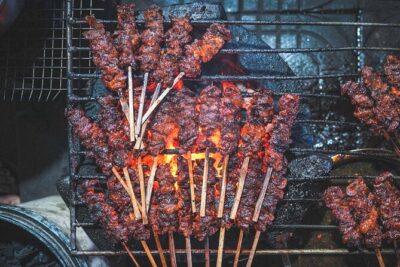
The opening food stop focuses on a rice and pork dish that many locals eat at the start of the day. Women often sell it from small roadside barbecue setups, where the pork is cooked over a grill and served with rice.
This is a useful first taste because it is familiar, filling, and easy to approach. If you are cautious with new food, a grilled pork and rice dish gives you a gentle start before the more unusual offerings appear.
The guide can explain the ingredients and the role of the dish in Cambodian morning routines. That context turns a simple plate into a lesson in local eating habits. The tour may also include Nom Banh Chok, a Cambodian noodle dish, along with grilled meats and other rotating specialties.
The exact menu can change. That is normal for a street-food tour, since the guide works with what is fresh and available that day. If you expect a fixed list of ten named dishes, you may find the experience less predictable. If you prefer to sample what locals are actually eating, the changing menu is part of the appeal.
Wat Kong Moch: seafood, drinks, and brave choices
Wat Kong Moch is described as a stop for Cambodian food, fresh fish, seafood, draft beer, shakes, and cocktails. It adds drinks and seafood to the evening, giving the tour a different rhythm from the first roadside grill.
This is also one of the places where the more daring foods may appear. You might find assorted bugs and other critters, as well as baby duck eggs with the embryo inside. Some people will want to try everything. Others will decide that grilled pork is quite enough adventure for one night.
You should not feel pressured. The insect tasting is an optional part of the experience, and one member of a family can skip it while others sample it. A tarantula has been included by at least one group, but that does not mean every tour will offer one.
The value of having a guide here is clear. You can ask what a food is, how it is eaten, and which ingredients are used before making your choice. Without that help, a market tray of unfamiliar food can be hard to understand. With it, you can make an informed decision instead of pointing at random.
Phsar Leu Thom Thmey, Siem Reap’s largest local market
Phsar Leu Thom Thmey is identified as the biggest local market in Siem Reap. This stop gives you a broader look at the food system behind the dishes you have already tasted.
Markets are useful because they show food before it becomes a finished plate. You may see fresh produce, fish, meat, snacks, and prepared foods arranged for local shoppers. The stop lasts about 30 minutes, so expect a focused visit rather than a long, unhurried market walk.
Your guide helps explain what you are seeing and may point out ingredients connected to the dishes on the tour. This is one reason the private format works well. You can ask about foods that catch your eye, and the pace can suit your group better than a large shared tour.
If you are sensitive to heat, crowds, strong smells, or uneven surfaces, markets can feel intense. Wear comfortable shoes and keep your belongings secure. The tour information says most people can participate and that the route is near public transportation, but it does not promise a fully step-free or climate-controlled experience.
A different pace for your next Siem Reap morning:
- Angkor Wat Sunrise or Sunset Tour with Guide from Siem Reap
5.0 · 12,109 reviews - Siem Reap: Angkor Wat: Small-Group Sunrise or Sunset Tour
5.0 · 9,444 reviews - From Siem Reap: Kampong Phluk Floating Village Tour by Boat
4.9 · 6,979 reviews - Sunset tour of Kampong Phluk stilts home village on the Tonle Sap
5.0 · 4,865 reviews
The night market and Cambodia’s snack culture
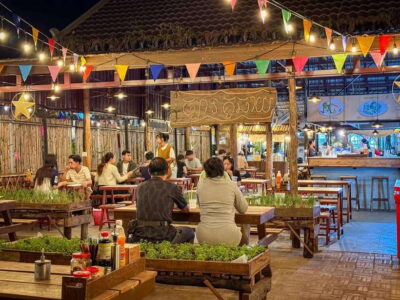
Another stop focuses on local food and the Siem Reap night market. This is where the tour leans most heavily into snack culture, with fried foods, sweets, insects, drinks, and other quick bites potentially appearing.
The menu may include crispy spring rolls, local desserts, and other Cambodian specialties. Since up to 10 tastings are included, you are likely to sample small portions at several locations rather than eat one large serving at each stop.
That arrangement is helpful for you if you want range. You can try a dish, decide what you like, and move on without committing to a full plate. It is less useful if you want a quiet dinner or a detailed cooking lesson at one restaurant.
The night market also gives you a chance to watch how food and shopping overlap in Siem Reap. People come for produce, snacks, drinks, and everyday goods, not only for a planned night out. Your guide can help separate ordinary local fare from foods aimed mainly at curious visitors.
Psar Deum Kralanh Market and everyday shopping
Psar Deum Kralanh Market is a more general local market, selling fruit, vegetables, toiletries, shoes, and other household goods. It is not only a food stop, and that is exactly why it is useful.
A food tour can become too narrow if it moves only between restaurants. This market shows the practical side of life in Siem Reap. You see where people buy daily supplies and how food sits alongside clothing, footwear, and consumer items.
There is also a chance to find the rice, egg, and pork breakfast combination again, described as a strong local choice. The repetition may seem odd if you are expecting ten entirely different dishes, but it reinforces how common and useful these foods are in Cambodian life.
You will have about 30 minutes here. Do not treat it as a dedicated shopping excursion, since the main purpose is still food and cultural context. If you want to buy something, ask your guide about prices and quality before purchasing.
Kork Thlok Market, the broadest look at local life
Kork Thlok Market rounds out the route with a wide mix of goods. You may see clothing, shoes, fresh fruit, flowers, vegetables, fish, meat, phone accessories, gloves, and other consumer products.
This final market stop helps connect the evening’s food to the wider community. Fresh ingredients are not presented in isolation. They share space with clothing, electronics, flowers, and household items, giving you a more grounded picture of local commerce.
The stop is scheduled for about 30 minutes. By this point, you may already have eaten a substantial amount, so pace yourself early. It is easy to accept every sample at the beginning and feel too full when the later dishes arrive.
Because the menu rotates, your guide may choose different stalls based on availability and your preferences. The private setup is useful here. You can say if you are full, need a vegetarian choice, or want to try something especially local.
What you may eat during the evening
The tour includes up to 10 local specialties, with vegetarian and other dietary options available. The named examples include:
- Nom Banh Chok
- Rice and pork
- Grilled meats
- Crispy spring rolls
- Fresh fish and seafood
- Local desserts
- Snacks and drinks
- Insects and other unusual foods
- Baby duck eggs
- Shakes, cocktails, or draft beer at one stop
This is not a promise that every item will appear on every outing. Street food depends on what vendors are preparing, and the itinerary notes a rotating menu.
The best approach is to arrive hungry but not starved. Small tastings add up, especially when drinks and desserts are included. Tell your guide about allergies, vegetarian needs, or foods you will not eat before the first stop.
I also recommend treating unfamiliar dishes with curiosity rather than pressure. You can learn plenty by looking, smelling, and asking questions. You do not need to eat a tarantula to have a successful Cambodian food night.
Why the private format adds value
The price is $52.25 per person, which is more than you would spend buying a few street snacks on your own. You are paying for more than food. The cost covers a private tuk-tuk, hotel transfers, an English-speaking guide, a driver, multiple tastings, drinks, and help navigating local markets.
For a couple or small group, that can be fair value. You avoid arranging several rides, guessing which stalls are safe or worthwhile, and translating menus or vendor conversations. You also get a guide who can explain what you are eating instead of leaving you to identify everything yourself.
The value is weaker if you are already comfortable finding local food and using tuk-tuks independently. In that case, you could spend less by exploring on your own. You would also lose the explanations and the planned variety.
Group discounts are available, though the amount is not specified. Since this is a private activity, only your group participates. That makes it a good choice for families, couples, and friends who want a relaxed pace or have different food limits.
Timing, pickup, and practical comfort
Hotel pickup and drop-off are included. You meet the guide in your hotel lobby and ride by tuk-tuk between stops, which keeps the evening simple and avoids arranging transport after eating.
The tour takes place over roughly three to four hours. Each listed market stop lasts about 30 minutes, while the first Siem Reap food stop is scheduled for about an hour. The route includes several short visits, so expect movement rather than long periods at one table.
A mobile ticket is provided, and confirmation is received at booking. The experience is near public transportation, although you may not need it because the included transfers cover the start and end of the tour.
Most people can participate, but the information does not give detailed accessibility specifications. If you need step-free access, special seating, or other assistance, ask the provider before booking. Tuk-tuks are open-sided vehicles, and markets can be crowded or uneven.
Tips for the guide and driver are not included. Carry some small cash if you want to thank them at the end. You can cancel for a full refund up to 24 hours before the local start time. Cancellations or changes within 24 hours are not refunded or accepted, and a minimum group size is required for the tour to operate.
Who will enjoy this food tour most
I would choose this tour for a first evening in Siem Reap, especially if you want help finding local food without spending your whole night planning. It gives you a quick sense of the city’s markets, snacks, breakfasts, drinks, and street cooking.
It suits adventurous eaters, but it also works for cautious ones because the menu includes familiar grilled foods and vegetarian choices. Families can split the risk: one person can try the insects while someone else sticks to noodles, pork, spring rolls, or dessert.
It is also a good fit for solo visitors who would rather not visit unfamiliar markets alone. The private guide and driver offer company, translation, and a planned route. The experience is less suited to anyone seeking a polished restaurant meal, a quiet atmosphere, or a strict menu with exact portion sizes.
Should you book the Siem Reap street food tour?
Book it if you want local food with explanation and transport included. The strongest parts are the private tuk-tuk, the range of stops, and guides such as Leap and Sara, who can make unfamiliar dishes easier to understand.
Skip it if you dislike open-air markets, cannot tolerate changing menus, or prefer to choose every dish yourself. At $52.25, the tour makes the most sense when you value guidance, convenience, and variety more than the lowest possible meal cost.
For most first-time visitors to Siem Reap, I think it is a practical way to begin eating locally. You get the freedom to try unusual foods without being forced to eat them, and you finish with a better sense of how Cambodian food fits into everyday life.
FAQ
How long does the Siem Reap street food tour last?
The tour lasts approximately three to four hours.
What is included in the price?
The tour includes hotel lobby pickup and drop-off by tuk-tuk, a private tuk-tuk ride, an English-speaking guide, a professional driver, authentic local food and drinks, and up to 10 specialty tastings.
Is the tour private?
Yes. Only your group participates in the private tour or activity.
Are vegetarian or other dietary options available?
Yes. Vegetarian and other dietary options are available. Tell the provider or guide about your needs when booking.
Do I have to eat insects or baby duck eggs?
No. Insects and baby duck eggs may be available, but they are optional. You can choose other foods if you do not want to try them.
What is the cancellation policy?
You can cancel up to 24 hours before the experience starts for a full refund. Cancellations or changes made less than 24 hours before the start time are not accepted or refunded.
Fresh reviews from around Siem Reap
- Savor the Countryside: Tours with Authentic Cooking Classes” 5.0 · 3 reviews
- Full-Day Tour Preah Vihea & Koh Ker Temple 3.7 · 3 reviews
- Angkor Wat Sunrise TukTuk Tour 5.0 · 3 reviews
- Angkor Grand Circuit Tour & Banteay Srei 5.0 · 3 reviews
- Guided Private Tuk Tuk Tour Angkor Wat and Small Circle and Five Extras 5.0 · 3 reviews
- Siem Reap Temple Tour 2-Day with Sunrise/Sunset 3.7 · 3 reviews
- Bangkok to Angkor Wat 2 Days 1 Night by Flight 4.5 · 3 reviews
- Kompong Pluk Tour 5.0 · 3 reviews